Saudi Strikes on Houthi Areas Kill 10 as Red Sea Tensions Escalate
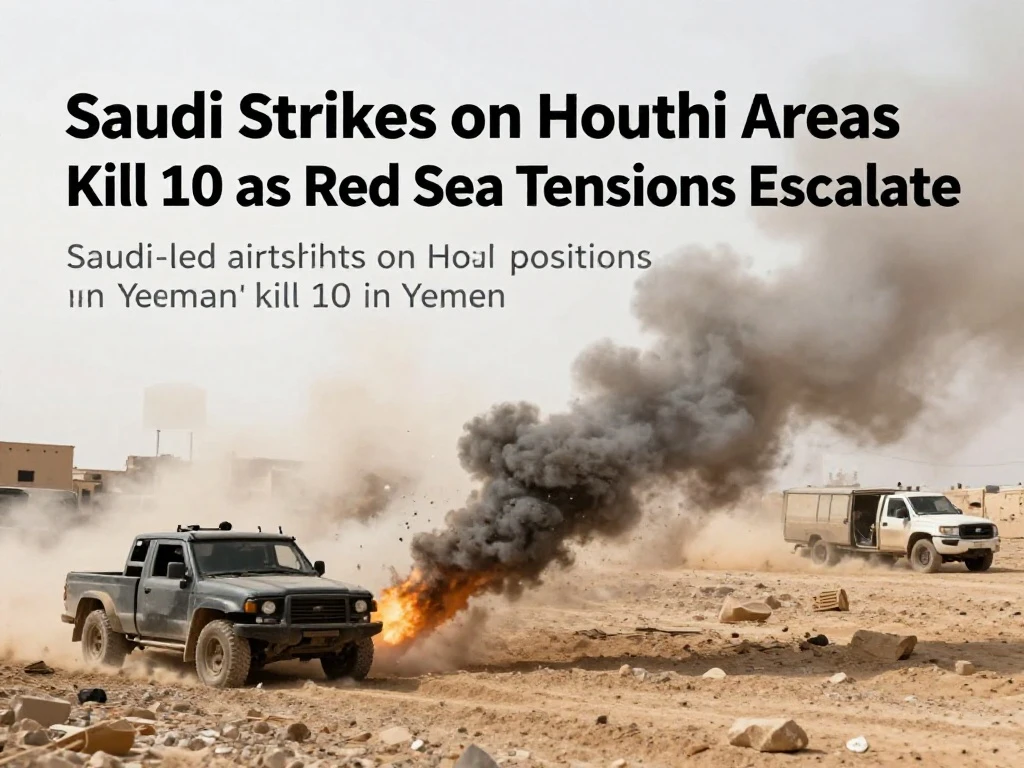
Saudi-led airstrikes on Houthi positions in Yemen have killed at least 10 people, according to reports, as fighting intensifies near the Bab al-Mandab strait—a critical chokepoint for global trade. The strikes come amid a significant increase in Houthi attacks on ships in the Red Sea, which the group claims are targeting vessels heading to or associated with Israel. “We’ve seen a significant increase in the number of Houthi attacks,” a source noted, underscoring the growing threat to international shipping. The Houthis, an Islamist militia movement, seized control of key territory last month, gaining virtual control of the Bab al-Mandab strait, which dominates the Red Sea and is a vital route for oil and gas exports from the region.nnIn response, Saudi-backed Yemeni forces and local allies launched a major counteroffensive last week to drive the Houthis back from the strait and to hit other Houthi positions. The coalition aims to secure the strategic waterway, but the Houthis have demonstrated their ability to disrupt global commerce. “You can do a lot of damage as a small group without very sophisticated weapons when you’re sitting at the mouth of one of the world’s most important trade routes,” an analyst told BBC News. The Houthis maintain they will continue attacking ships in the Red Sea, raising concerns over the safety of international navigation and the potential for broader conflict.nnThe conflict has also spilled over into Saudi Arabia, with the Houthis targeting high-profile sites such as oil infrastructure and the capital’s airport. These attacks on key symbols of the kingdom’s international integration and economic future make painfully obvious the costs of Riyadh’s strategic choices. The recent attack on Riyadh’s main airport forced airlines across Europe and Asia to suspend services, marking one of the most significant disruptions to Saudi civil aviation in years. The airport is set to remain shut this week as airlines cancel services, highlighting the vulnerability of critical infrastructure.nnInternational condemnation has been swift. German foreign policy spokesperson Johann Wadephul (CDU) sharply condemned the attack on Riyadh’s airport, reflecting growing concern over the escalating violence. The situation remains volatile, with the Houthis vowing to continue their attacks and Saudi-backed forces pressing

 Shimanta Das