Bangladesh Police Fire Tear Gas as Garment Worker Protests Over Low Wages Spread Nationwide
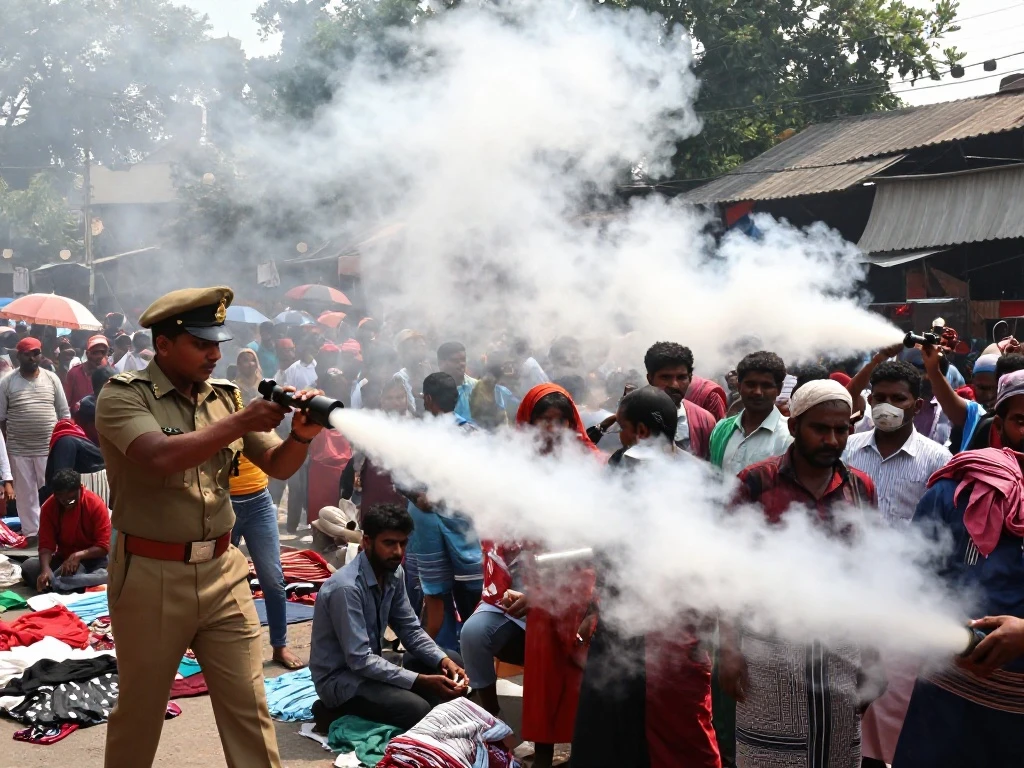
In Bangladesh, police have used tear gas and sound grenades against thousands of marching garment workers as protests over low wages and rising living costs have spread nationwide, temporarily closing about 500 factories. The workers, who gathered on a main road and halted traffic during rush hour, are demanding a minimum monthly wage of $242—double their current pay. At one stage, the workers started pelting brick chips, prompting police to respond with tear gas and sound grenades, forcing the workers to retreat from the main road and nearby alleys. The unrest highlights the growing tension in a sector that is the backbone of Bangladesh’s economy.
The garment industry is crucial to Bangladesh, accounting for more than 80 per cent of the country’s total export earnings, employing around 4 million workers, and contributing roughly 10 per cent to its GDP, according to Reuters. The sector is particularly important for employment, especially for women, who make up a large share of its workforce. It has helped Bangladesh create jobs, attract foreign buyers, and become a major supplier to international fashion brands. Around 3,500 textile and clothing factories in the country supply major global brands and retailers such as Levi’s, Zara, Walmart, and H&M.
In response to the growing protests that have disrupted major industrial areas, Bangladesh has set up a new wage board to review the minimum pay for garment workers. The board’s decision will be closely watched by both workers and international brands, as it could set a precedent for future wage negotiations in the sector. The protests underscore the challenges faced by workers trying to cope with rising living costs, and the government’s ability to address their demands while maintaining the stability of a key economic sector.
The unrest also raises questions about the sustainability of Bangladesh’s garment industry, which has long been criticized for low wages and poor working conditions. While the industry has brought economic growth and employment, the current protests signal that workers are increasingly unwilling to accept wages that they say are insufficient to meet basic needs. As the wage board deliberates, the world watches to see how Bangladesh balances the demands of its workforce with the pressures of global competition.

 Shimanta Das