First Measles Death in New York in Over 30 Years: A Sobering Wake-Up Call
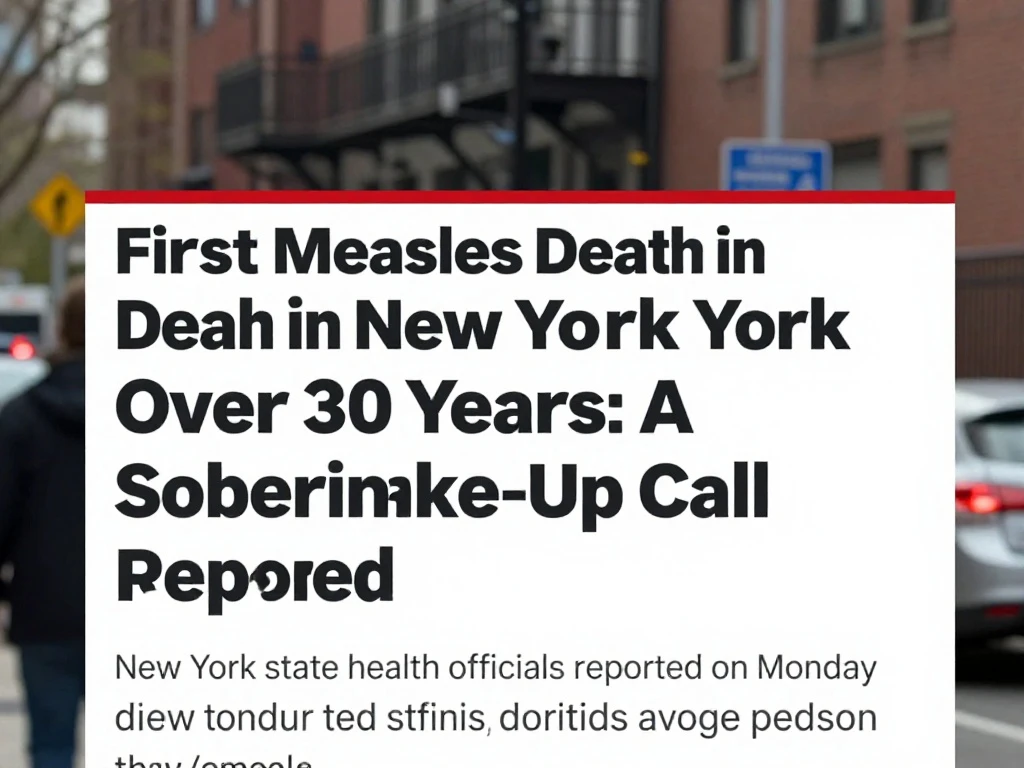
New York state health officials reported on Monday the first measles-associated death in a child in over three decades, marking a grim milestone in the ongoing battle against a disease once considered eliminated in the United States. The child, who lived in Lewis County—a rural area in the state’s North Country located east of Watertown—died after contracting measles, according to a joint statement from the New York State Department of Health and Lewis County Public Health. “We are deeply saddened by the death of a child in Lewis County associated with the ongoing measles outbreak,” the agencies said. Officials did not release additional information about the child, citing privacy concerns.nnThe death comes amid a resurgence of measles in New York, with 170 cases reported outside New York City as part of the current outbreak. Measles remains among the most transmissible pathogens ever documented, capable of spreading through the air and lingering in enclosed spaces for up to two hours. “Measles is highly contagious, and vaccination remains our best protection against this dangerous disease,” a health official said in a statement following the announcement. The tragedy underscores the critical importance of maintaining high vaccination coverage to prevent such outbreaks.nnThe United States had successfully stopped the domestic spread of measles in 2000 by sustaining high vaccination rates. However, in recent years, coverage has fallen below the 95% threshold needed to prevent outbreaks of the viral disease. This decline has created pockets of vulnerability, particularly in communities with lower immunization rates, allowing the virus to gain a foothold and spread rapidly. The death in Lewis County serves as a stark reminder of the consequences of slipping vaccination rates and the ease with which measles can reclaim ground when herd immunity wanes.nnAs health officials continue to investigate the outbreak, they are urging the public to ensure they are up to date on measles vaccinations, especially children and those in close contact with vulnerable populations. The measles-mumps-rubella (MMR) vaccine is safe and highly effective, providing lifelong protection against measles. This tragic event highlights the need for renewed efforts to boost vaccination coverage and combat misinformation that can lead to vaccine hesitancy. Community leaders, healthcare providers, and public health officials must work together to restore
 Shimanta Das