Australia’s Solar Eclipse Bonanza: Five Total Eclipses in 16 Years
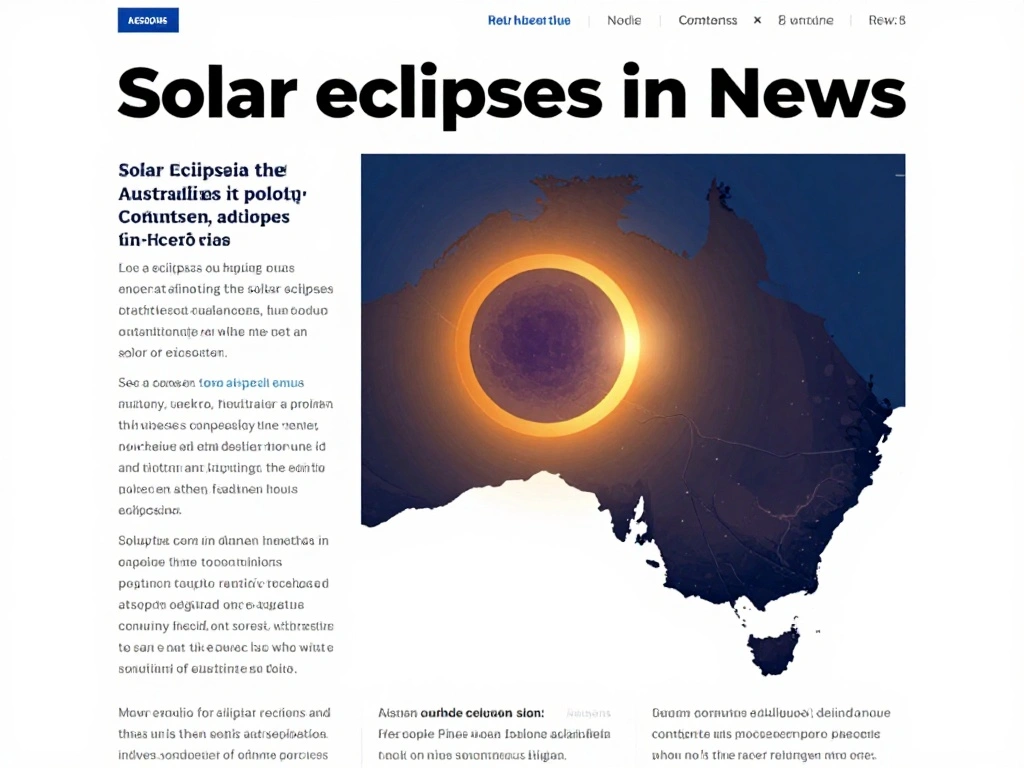
Australia is set to become the world’s premier destination for solar eclipse chasers, with an extraordinary sequence of five total solar eclipses crossing the mainland in less than 16 years, starting in 2023. This rare celestial phenomenon offers a unique opportunity for both seasoned astronomers and curious onlookers to witness the breathtaking moment when the Moon completely obscures the Sun, turning day into twilight. However, with this awe-inspiring event comes a critical responsibility: safely observing a solar eclipse is paramount to protect your eyesight.nnSolar eclipses are relatively common in Australia, largely due to the continent’s vast area of over 7 million square kilometers, which often falls within the shadow’s path. The upcoming eclipses are particularly special because they will cross populated regions, making them accessible to millions. The first of these, which occurred in 2023, was a spectacular preview, but the remaining four are already marked on calendars: July 22, 2028 (Kimberley, NT, southwest QLD, NSW), November 25, 2030 (Eyre Peninsula, northwest NSW, southern/southeast QLD), July 13, 2037 (southern WA, southern NT, western QLD, passing over Brisbane and the Gold Coast), and December 26, 2038 (central WA, SA, NSW/VIC border, and Canberra).nnWhile the total solar eclipse is a spectacle that can be viewed with the naked eye during totality, the partial phases before and after require proper eye protection. Timing your eye protection is incredibly important – you must wear certified eclipse glasses or use a pinhole projector during all partial phases, and only remove them when the Moon fully covers the Sun. Even a brief glimpse of the Sun’s intense light can cause permanent retinal damage. Therefore, planning ahead and understanding the exact times of the eclipse in your location is essential for a safe and memorable experience.nnFor those eager to witness these cosmic events, staying informed is key. As the dates approach, more detailed information will be available from astronomical societies and local media. In the meantime, mark your calendars and start planning your travel

 Shimanta Das