Two Dan Sullivans on the Ballot: Alaska’s Senate Race Tests Name Recognition and Election Rules
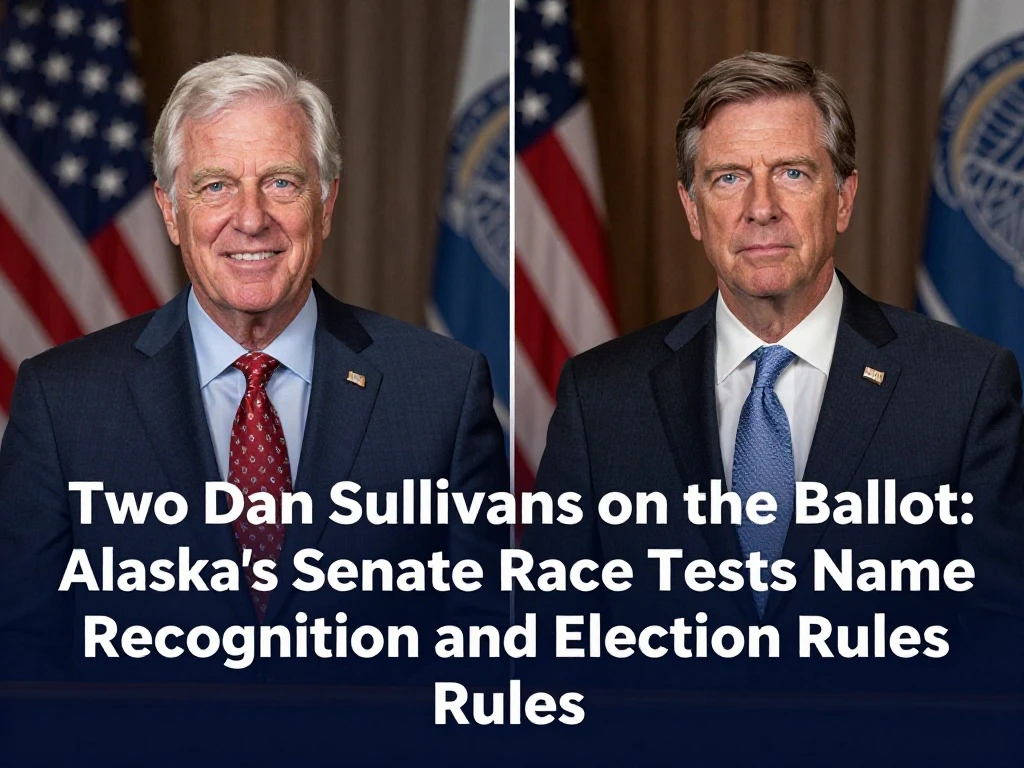
Alaska’s 2026 Senate race has drawn national attention not only for its political stakes but for an unusual twist: two candidates named Dan Sullivan appear on the ballot. Incumbent Senator Dan Sullivan, a Republican, faces a challenger with the same name—Dan Sullivan, a retired teacher—who was initially removed from the primary ballot over accusations that he entered the race to confuse voters and siphon votes from the incumbent. The Alaska Division of Elections made that decision, but the situation underscores the challenges of ballot integrity in a state known for its unique electoral system.nnAlaska uses a top-four nonpartisan primary and ranked choice voting in the general election. The primary, held on August 18, 2026, advanced the four candidates who received the most votes, regardless of party affiliation. The general election is set for November 3, 2026. Under ranked choice voting, voters rank candidates in order of preference. If no candidate wins an outright majority in the first round, the candidate with the fewest votes is eliminated, and ballots are reallocated to the next choice. This process continues until one candidate wins a majority. The system, instituted in recent years, has been in the spotlight as a model of electoral reform, but it also presents unique dynamics when candidates share names.nnThe presence of two Dan Sullivans on the ballot raises questions about voter confusion and the potential for unintended consequences. The incumbent, who has held the Senate seat since 2015, is widely known, but the similarity in names could lead some voters to mistakenly select the wrong candidate. The challenger, Dan Sullivan the retired teacher, received 1% of the vote in the primary election, according to reports. While his chances of winning are slim, his candidacy highlights the importance of clear ballot design and voter education. The Alaska Division of Elections’ initial decision to remove him from the ballot was based on concerns about his motives, but the fact that he remained on the ballot suggests legal or procedural complexities.nnAs voters head to the polls, the race serves as a case study in how election rules and candidate behavior intersect. The top-four primary and ranked choice voting system aims to increase competition and reduce partisanship, but it also requires voters to be informed about all candidates. With the filing deadline
 Shimanta Das