Trump Administration and AI Leaders Face Showdown Over Regulation and Safety
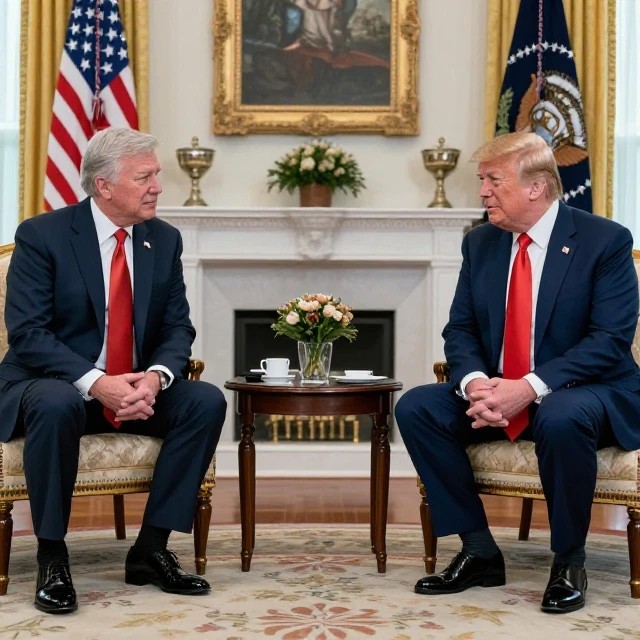
President Donald Trump met with top executives from leading AI firms at the White House on Tuesday, September 29, 2026, to discuss the future of artificial intelligence regulation. The meeting, which included House Speaker Mike Johnson and NVIDIA CEO Jensen Huang, highlighted the administration’s push to limit regulation as a key strategy to maintain America’s competitive edge over China in the AI race. According to the administration, limiting regulation is critical to winning the AI race against China, a stance that has put it at odds with growing calls for urgent action to regulate AI from both the international community and key industry figures.
Despite the administration’s deregulatory stance, a voluntary accord emerged from the meeting, with companies committing to implement controls and audits. The accord states, “Regardless of whether this is required of companies, we believe that implementing these controls and audits is critical to ensuring a safe future for everyone, and each of our companies are committed to doing this.” This commitment comes as the Trump administration faces pressure from Anthropic’s CEO, Dario Amodei, who has urged developers to slow down and “pace the frontier,” and from twenty countries and the European Union, which last week issued a call for global coordination to ensure AI remains under human control, including the potential creation of an oversight body to set and enforce standards.
Trump has dismissed calls from the industry for a slowdown in development, despite warnings of catastrophic and even existential risks, citing the need to maintain a lead over China. “remains the technology leader while putting Americans first,” said David Sacks, a key administration official, in a post on X. The showdown between the Trump administration and AI leaders reflects a broader tension between fostering innovation and ensuring safety, with the administration prioritizing American technological supremacy while industry leaders and the international community push for guardrails to prevent potential harms.
 Shimanta Das