Texas Court Overturns Conviction of Crystal Mason in 2016 Provisional Voting Case
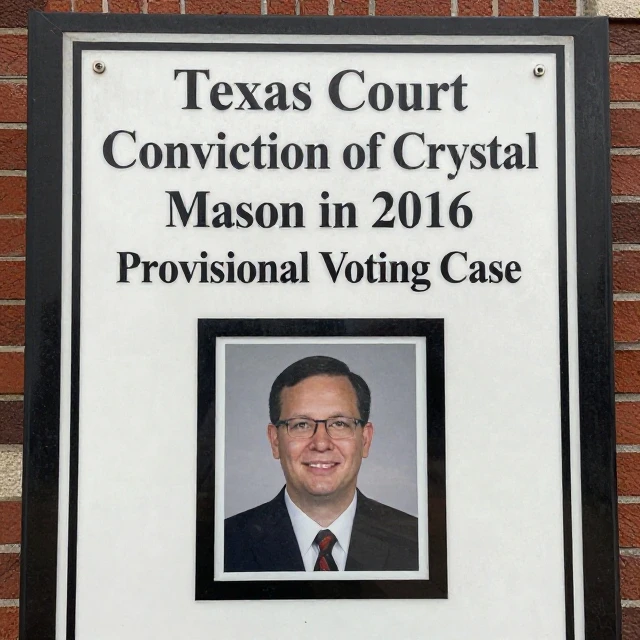
In a significant legal development, the Texas Court of Criminal Appeals has overturned the conviction of Crystal Mason, a woman who was convicted in 2016 for casting a provisional ballot while ineligible to vote. The court’s decision, issued in an unsigned opinion, concluded that it had mistakenly accepted an appeal from prosecutors who sought to reverse a 2024 ruling by the Fort Worth-based 2nd Court of Appeals that had already reversed Mason’s conviction. “Having examined the record and the briefs, we conclude that our decision to grant review was improvident,” the majority opinion stated, without providing further explanation for its reasoning.
The ruling has sparked criticism from some quarters, particularly regarding the lack of transparency. Judge Finley, in a dissenting opinion, complained that the majority did not explain its decision. “The citizens of this State are owed some explanation from this Court for why it now refuses to act on the critical issue of election integrity,” Finley wrote. The case has been closely watched as a test of Texas’s election laws and their enforcement, with supporters of Mason arguing that her conviction was a miscarriage of justice and opponents contending that it was necessary to uphold the integrity of the ballot box.
Despite the court’s decision, Tarrant County District Attorney Phil Sorrells made clear that his office will continue to enforce election laws. In a public statement, Sorrells said, “Illegal voting remains a crime in Texas,” and emphasized that his office’s responsibility is to “enforce the law fairly, protect the integrity of our elections, and pursue justice without fear or favor.” His remarks signal that while Mason’s conviction has been overturned, the broader effort to prosecute election law violations remains a priority.
Mason, for her part, celebrated the outcome but framed it within a larger struggle. “If the right to vote weren’t so important, they wouldn’t be trying to take it away,” she said, underscoring the stakes of the case for voting rights advocates. The decision brings an end to a years-long legal saga that began when Mason, who was on supervised release for a federal

 Shimanta Das