
Kilmar Abrego Garcia Leaves U.S. for Spain
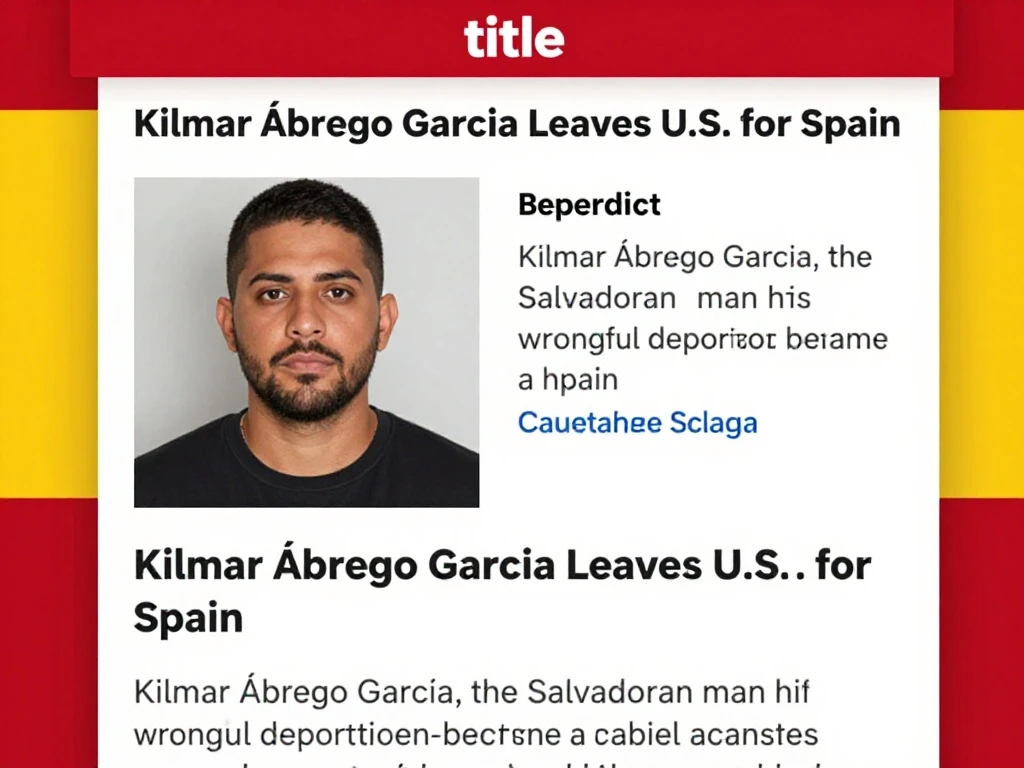
Kilmar Ábrego García, the Salvadoran man whose wrongful deportation became a high-profile test of President Donald Trump’s immigration crackdown, arrived in Spain on Wednesday after voluntarily leaving the United States, ending a 20-month legal saga. His departure marks the final chapter in a case that drew national attention and raised questions about due process and immigration enforcement.
The US Department of Homeland Security said on Wednesday it was “delighted to announce that Kilmar Ábrego Garcia has self-deported from the United States to Spain.” The department said he had paid for his own flight and would be barred from returning. Ábrego García remained silent when reporters questioned him at the airport, asking about his plans in Spain.
Senator Chris Van Hollen, who met with Ábrego García in El Salvador one month after his deportation, described the outcome as significant. “Instead, what we have is our judicial system working with the good legal team, and we have this outcome where Garcia is able to essentially chart his own future and destiny,” Van Hollen said. His comments underscore the role of legal advocacy in achieving a resolution that allows Ábrego García to move forward.
According to Sandoval-Moshenberg, Ábrego García would decide where to settle for the next two years to wait out the remainder of the Trump administration. This period of self-imposed exile in Spain gives him the opportunity to plan his future without the immediate threat of deportation or detention. It also highlights the long-term impact of U.S. immigration policies on individuals and families.
Questions remain over his criminal case. It was unclear how Ábrego García’s departure would affect prosecutors’ efforts to revive a criminal case against him in Tennessee. Ábrego García has maintained for more than a year that if he had to leave the U.S., he would do so voluntarily rather than be deported. His departure may complicate the legal proceedings, as his presence in the U.S. is typically required for criminal prosecution.
The case began when Ábrego García was wrongfully deported to El Salvador in 2025, despite having legal status in the U.S. His deportation sparked outrage

 Shimanta Das