
Army to Detonate 10,000 Pounds of Toxic Chemicals at Iowa Plant
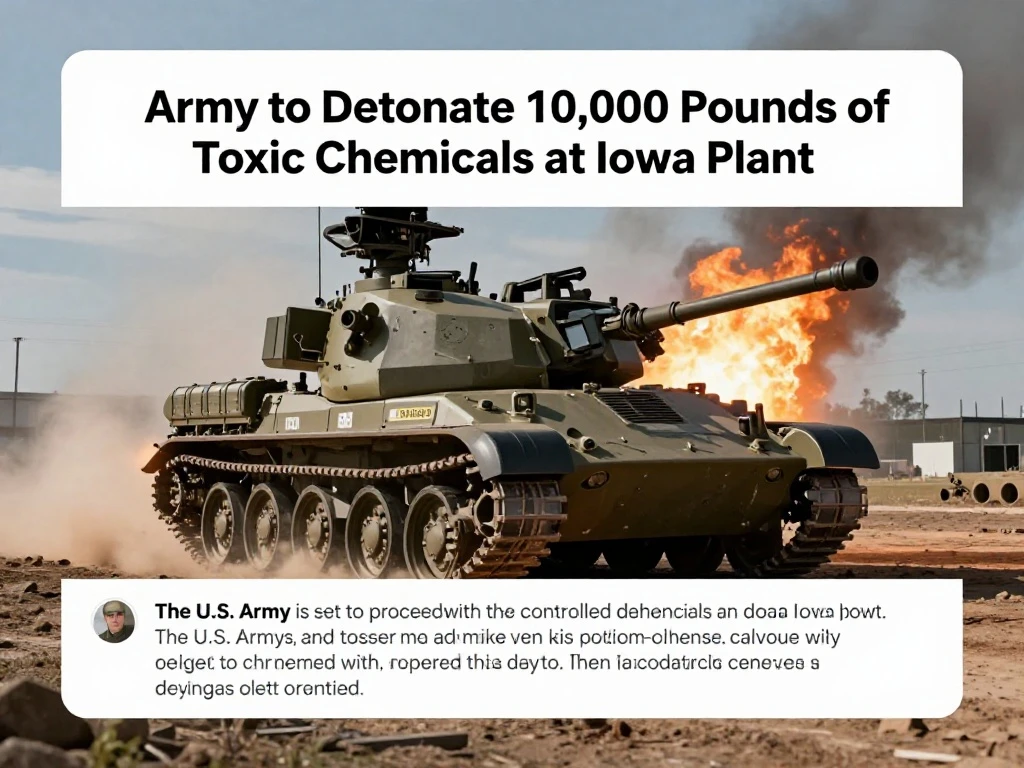
The U.S. Army is set to proceed with the controlled detonation of approximately 10,000 pounds of toxic chemicals at an Iowa facility, a decision that has sparked both concern and defense from officials. The chemicals in question include lead azide, a legacy energetic material historically used as a primary explosive in munitions. As temperatures drop, officials warn that the already dangerously degraded and unpredictable compound is susceptible to an uncontrolled detonation, making the controlled blasts essential. “We remain in close contact with authorities on the ground, while state agencies continue to monitor incoming data from the State Emergency Operations Center,” said Iowa Governor Kim Reynolds, underscoring the state’s vigilance.
The Army has maintained that detonating the chemicals in a controlled manner, with mitigation measures in place, is safer than risking a surprise blast. Lead azide, upon impact in munitions, readily detonates and subsequently sets off a main, larger explosive charge. However, the compound’s instability has raised fears among local residents and environmental groups. After significant public outcry, the Army postponed the detonations until November, but the government had previously made clear that the Army intended to act regardless of whether the permit remained stayed. This determination reflects the urgency of addressing the deteriorating stockpile.
Environmental and health concerns loom large, particularly regarding lead contamination. Once deposited on surfaces or in soil, lead particles can remain there forever unless physically removed. This persistence poses long-term risks to the community and ecosystem. To address these fears, the Environmental Protection Agency (EPA) has deployed real-time air monitors. By Wednesday evening, the EPA reported “ZERO” detection of airborne lead, which it said “has remained consistent before, during, and after this morning’s controlled detonation.” This data aims to reassure the public that the operation is being conducted safely.
Despite the EPA’s assurances, the decision to proceed with the detonations has not been without controversy. The Army’s approach involves careful planning and execution to minimize risks. Officials at a recent conference insisted that the controlled blasts are necessary due to the compound’s degraded state. As temperatures continue to fall, the risk of an uncontrolled detonation increases, leaving authorities with few alternatives. The Army’s stance is that a

 Shimanta Das