Hegseth Doubles Down on Military Leadership Cuts, Slashing 20% of General and Admiral Positions
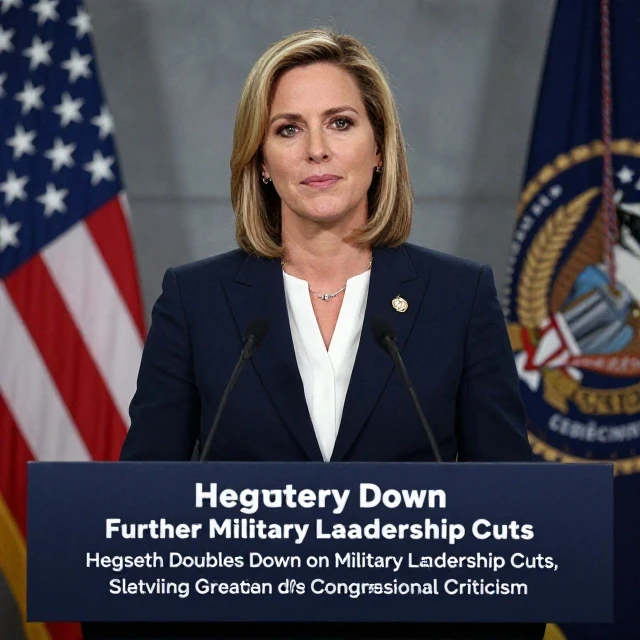
Defense Secretary Pete Hegseth is expected to announce Wednesday a dramatic expansion of his efforts to reshape the U.S. military’s senior ranks, ordering a 20% reduction in general and admiral positions across all branches. The move, which doubles the cut he mandated last year, will be unveiled during a speech at Marine Corps Base Quantico in Virginia before hundreds of junior service members, according to two U.S. officials who spoke to Reuters. The announcement comes amid growing criticism from Congress, where lawmakers have questioned the pace and scale of Hegseth’s restructuring of the armed forces.
In his remarks, Hegseth is set to outline a series of new initiatives aimed at fostering a “warrior ethos” and streamlining the military’s top-heavy leadership. He has already confirmed the dismissal of 20% of top military leadership, and the latest cuts will affect authorized positions as well as active-duty personnel. There are currently over 800 active-duty generals and admirals across the Army, Navy, Marine Corps, Air Force, and Space Force, meaning the reduction could eliminate more than 160 senior roles. Hegseth has previously stated, “We are no longer the woke department,” signaling a broader cultural shift within the Pentagon.
As part of the initiative, Hegseth announced that Elon Musk, the tech billionaire who previously served as a top adviser to President Donald Trump before their public falling out last year, will co-lead the effort alongside former Republican House Speaker Newt Gingrich and Anduril co-founder Palmer Luckey. The trio is expected to bring private-sector efficiency and innovation to the restructuring process. Additionally, Hegseth revealed plans for a new base and an autonomous warfare command, further indicating a focus on modernizing the military’s capabilities and organizational structure.
The cuts have drawn sharp criticism from congressional leaders who argue that slashing senior leadership could undermine military readiness and strategic coordination. However, Hegseth has defended the moves as necessary to eliminate bureaucracy and refocus the Pentagon on combat readiness. As the department prepares to finalize the reductions by January, the debate over the future of U.S. military leadership is likely to intensify, with lawmakers vowing to scrutinize the

 Shimanta Das