Emily Wilson vs. Christopher Nolan: A Clash Over ‘The Odyssey’
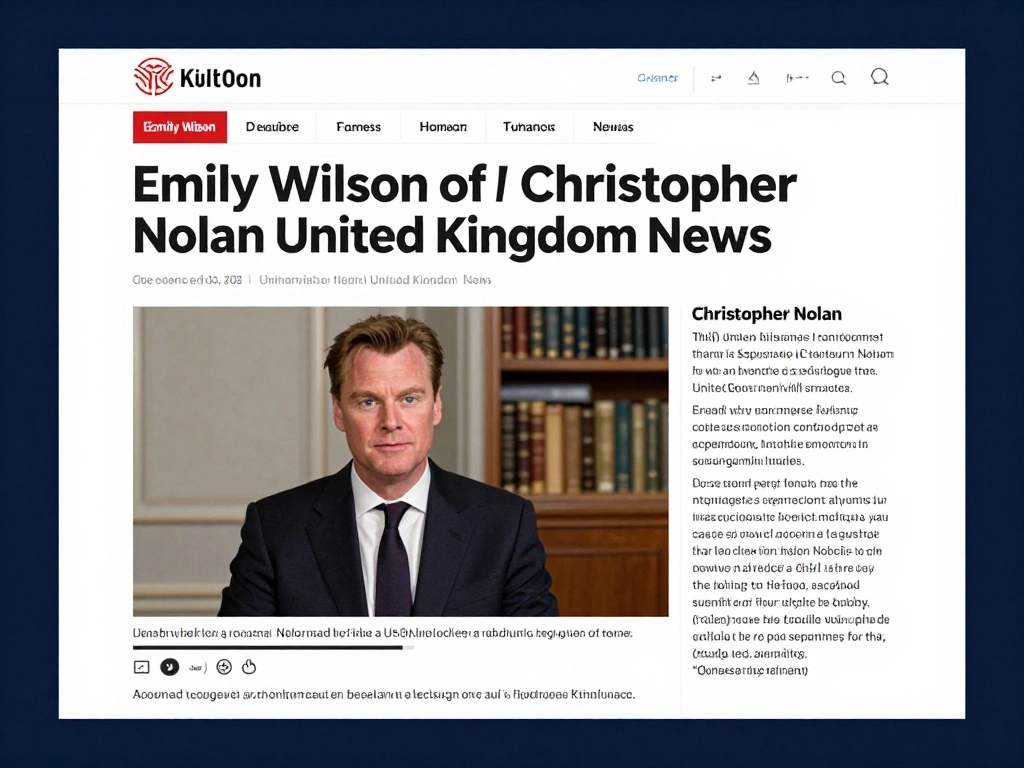
Christopher Nolan’s The Odyssey has been hailed as a cinematic triumph, with a 94% ‘Fresh’ rating on Rotten Tomatoes and rave reviews from critics. Historian Tom Holland called it “by some way the best cinematic adaptation of a Greek myth I have ever seen,” and The Independent‘s Clarisse Loughrey awarded it five stars, deeming it Nolan’s “best film to date.” The film is expected to be a major Oscar contender. However, not everyone is impressed. Emily Wilson, the first woman to translate Homer’s epic poem, has published a scathing critique in the London Review of Books, titled “I would be ashamed to have written any part of this.”
Wilson’s review takes aim at the film’s lack of depth. She argues that Nolan’s adaptation “has nothing convincing to say” and “lacks psychological, emotional, political and ethical depth.” This is particularly striking given that Nolan himself cited Wilson’s translation as a key inspiration for his take on the story. Wilson points out that using the epic’s beautiful backdrop to redeem the hero of a territorial war seems like a major oversight. Her critique raises questions about whether a mainstream Hollywood director like Nolan receives an undue level of intellectualized praise, even when the source material’s complexities are glossed over.
The tension between Wilson and Nolan highlights a broader debate about adaptation and fidelity. While Nolan’s film has been praised for its visual spectacle and narrative ambition, Wilson’s critique underscores the challenges of translating ancient texts for modern audiences. She suggests that the film prioritizes epic grandeur over the nuanced themes of violence, trauma, and morality that are central to Homer’s work. For Wilson, the movie’s success may come at the cost of the very depth that makes the original poem enduring.
Ultimately, the divide between Wilson’s academic perspective and the popular reception of Nolan’s film reflects a classic clash between scholarly rigor and cinematic entertainment. Whether audiences agree with Wilson or not, her critique adds a valuable layer to the conversation about how we interpret and adapt classical myths. As The Odyssey continues to dominate box offices and awards buzz, Wilson’s voice serves as a reminder that even

 Shimanta Das