Cornell Fraternity Sexual Assault Case Reopened: Prosecutors Revisit Decision After Lawsuit Outcry
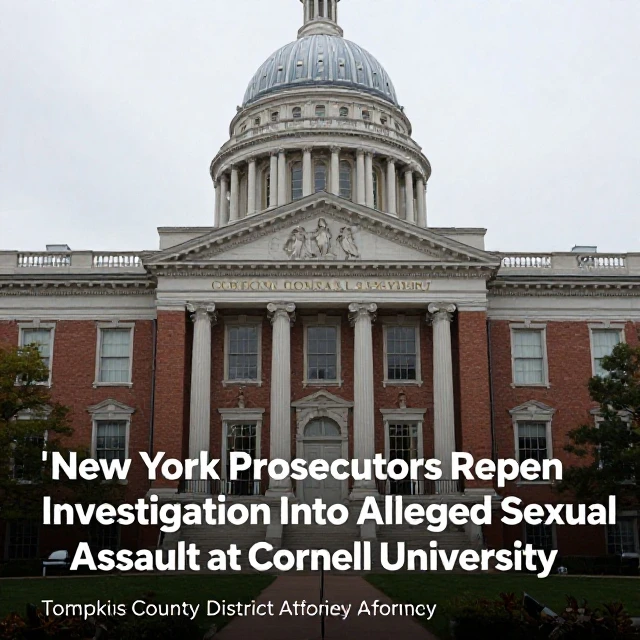
The Tompkins County District Attorney has reopened an investigation into an alleged sexual assault at Cornell University after a civil lawsuit sparked public outrage. The case centers on allegations against seven members of the Xi chapter of Chi Phi fraternity, who were previously not charged. The DA’s decision to revisit the matter comes after the lawsuit, filed this month, presented a narrative that differs significantly from the woman’s initial police report two years ago. According to the district attorney, the civil complaint omits any reference that Jane Doe consented to the sexual contact, a key discrepancy that prompted the review.
The university has stated that the Xi chapter of Chi Phi fraternity remains barred from campus, but cited federal privacy law in declining to comment on individual disciplinary actions. “Federal privacy law prohibits Cornell from disclosing specific information regarding individual students and we therefore are unable to make a public statement on any other disciplinary response,” a statement read. Meanwhile, former federal prosecutor Berit Berger told CNN’s Anderson Cooper on Monday that exchanges between the parties will be a critical piece of evidence. Giuffra noted that these messages were provided to authorities in 2024 and could play a pivotal role in the reopened investigation.
Jane Doe, the alleged victim, has spoken out about the impact of the assault. “I was brutalized and it injured me physically but perhaps more importantly, emotionally,” she said. The DA’s initial decision not to pursue criminal charges was based on the police report, which he says differs substantially from the lawsuit’s allegations. The lawsuit’s omission of consent references has become a focal point, as prosecutors now must weigh the new information against the original statement. The case highlights the complexities of sexual assault investigations on college campuses and the challenges of reconciling differing accounts.
As the investigation proceeds, the district attorney will examine the evidence, including the messages provided in 2024, to determine whether criminal charges are warranted. The reopening signals a renewed effort to seek justice in a case that has drawn significant attention. Cornell’s stance on the fraternity’s status remains unchanged, but the legal process will continue to unfold. The outcome could have broader implications for how universities and law enforcement handle sexual assault allegations, particularly when civil and criminal proceedings intersect.
 Shimanta Das