Iowa Evacuation: Controlled Detonation Safety Measures
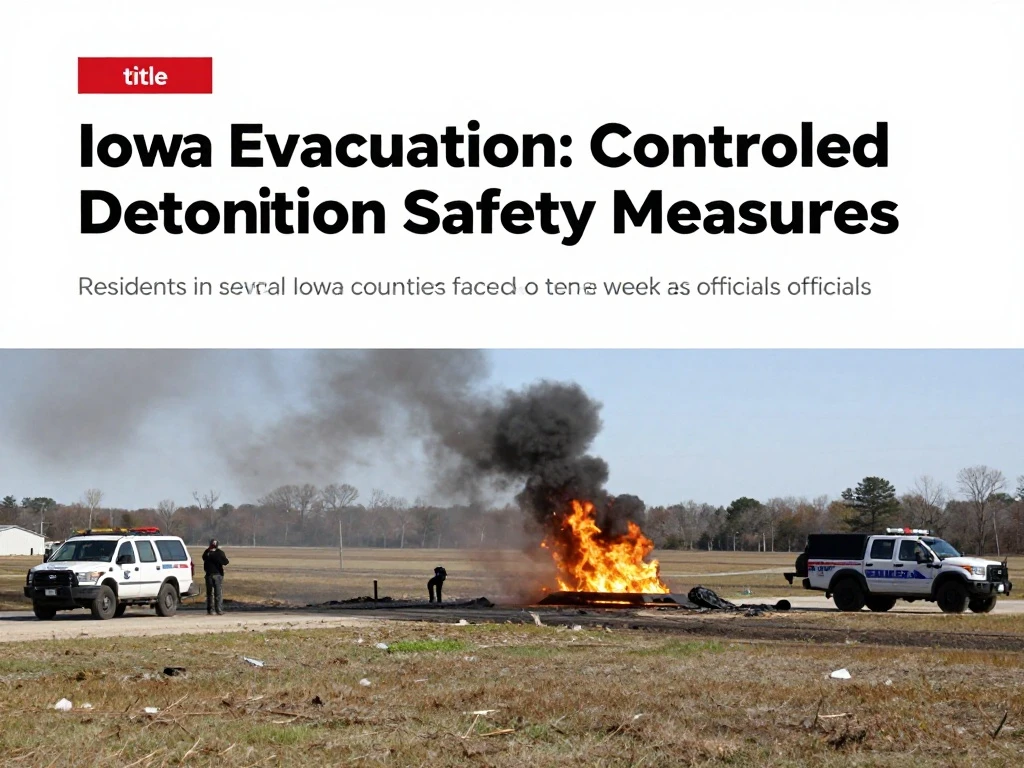
Residents in several Iowa counties faced a tense week as officials urged them to evacuate or shelter in place ahead of a controlled detonation. The operation, aimed at safely disposing of hazardous materials, prompted a disaster emergency proclamation from Governor Kim Reynolds for three counties on November 24. The move came as authorities worked to mitigate potential risks associated with the detonation, particularly the release of lead particles that could pose serious health threats.
Lead exposure is a significant public health concern, especially for children and expectant mothers. Officials emphasized that even short-term exposure to lead can have lasting effects on neurological development and overall health. Children and pregnant women are particularly vulnerable to lead poisoning, which can cause learning disabilities, behavioral issues, and developmental delays. As a result, residents were strongly advised to take precautionary measures, including temporary evacuation or sheltering indoors to minimize exposure.
The controlled detonation was part of an effort by the U.S. Army to safely dispose of unstable or hazardous materials. The Army asked the public to “remain indoors during the potential exposure period if you cannot evacuate beforehand.” This guidance was issued to protect residents from inhaling or ingesting lead-contaminated dust that could be stirred up by the detonation. Officials also recommended sealing windows and doors, turning off ventilation systems, and avoiding outdoor activities until the all-clear was given.
For those who chose to evacuate, the process involved quickly gathering essential belongings and important documents. Emmalynn Beck, a resident of the area, told ABC affiliate KCRG in Cedar Rapids earlier this week that she was storing away all of her important documents and photos that she could not later wipe down. “I’m taking anything I can’t clean,” Beck said, highlighting the concern over lead dust settling on surfaces. Her actions reflect the broader anxiety among residents who were unsure how long the exposure risk would last and what cleanup efforts would be necessary upon return.
Local authorities coordinated with emergency management agencies to provide shelters and resources for evacuees. The disaster emergency proclamation signed by Governor Reynolds on November 24 unlocked state resources to assist with the evacuation and subsequent cleanup efforts. The proclamation covered three counties, ensuring that

 Shimanta Das