France Grinds to a Halt: Hundreds of Thousands Strike Over Wages and Schools
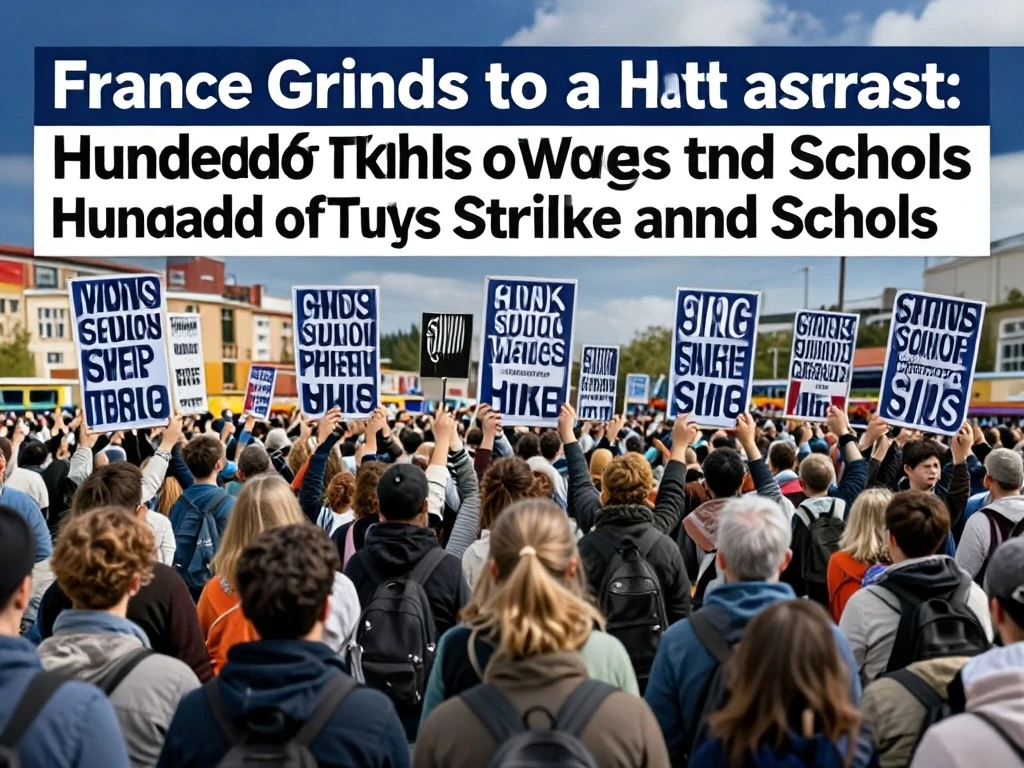
Hundreds of thousands of people took to the streets across France on Thursday in a nationwide day of strikes and demonstrations, as unions ramped up pressure on the government over the cost of living, demands for higher wages, and cuts to public services. Authorities deployed as many as 70,000 police in cities including Marseille, Grenoble, and Lyon, bracing for another day of mass action called by the country’s big-five unions. The walkout was expected to include hospital staff, air traffic controllers, postal workers, public and private school teachers, and rail workers, threatening widespread disruption to daily life.nnIn Paris, a diverse crowd sang the national anthem, “La Marseillaise,” as carnival-style floats rolled through the streets after the main march set off in the afternoon from the Place de la Republique. Similar rallies took place in Lyon, Marseille, and elsewhere, marking another chapter in more than a month of recurring protests. France’s Interior Ministry said more than 600,000 people took to the streets, while the CGT union claimed nearly 1 million participants. The demonstrations remained largely peaceful, though tensions stayed high after earlier violence, prompting authorities to impose curfews, ban large gatherings, and require marchers to avoid major boulevards—measures unions have denounced as restrictive.nnThe strike comes as France’s main unions warn the country is on the brink of recession and that layoff plans are multiplying. France’s four main rail unions said the government’s proposed budget cuts would “worsen poverty, slash social security, freeze state workers’ salaries and dry up investment needed for environmental measures.” A Paris train driver with the CGT union emphasized the broader political stakes: “It’s important that we also come out to demonstrate against the rise of the far right as the presidential election approaches.” The diverse coalition of workers reflects growing discontent over economic insecurity and a perceived erosion of public services.nnThe government’s response has been firm, with Interior Minister Gerald Darmanin vowing to maintain order and protect institutions. However, the scale of the turnout underscores the depth of public anger and the challenge facing President Emmanuel Macron’s administration. Unions have vowed to keep up the pressure, with further actions planned if their demands are not met. As France navigates

 Shimanta Das