Winter 2026-2027 Snowfall Predictions: What the United States Can Expect
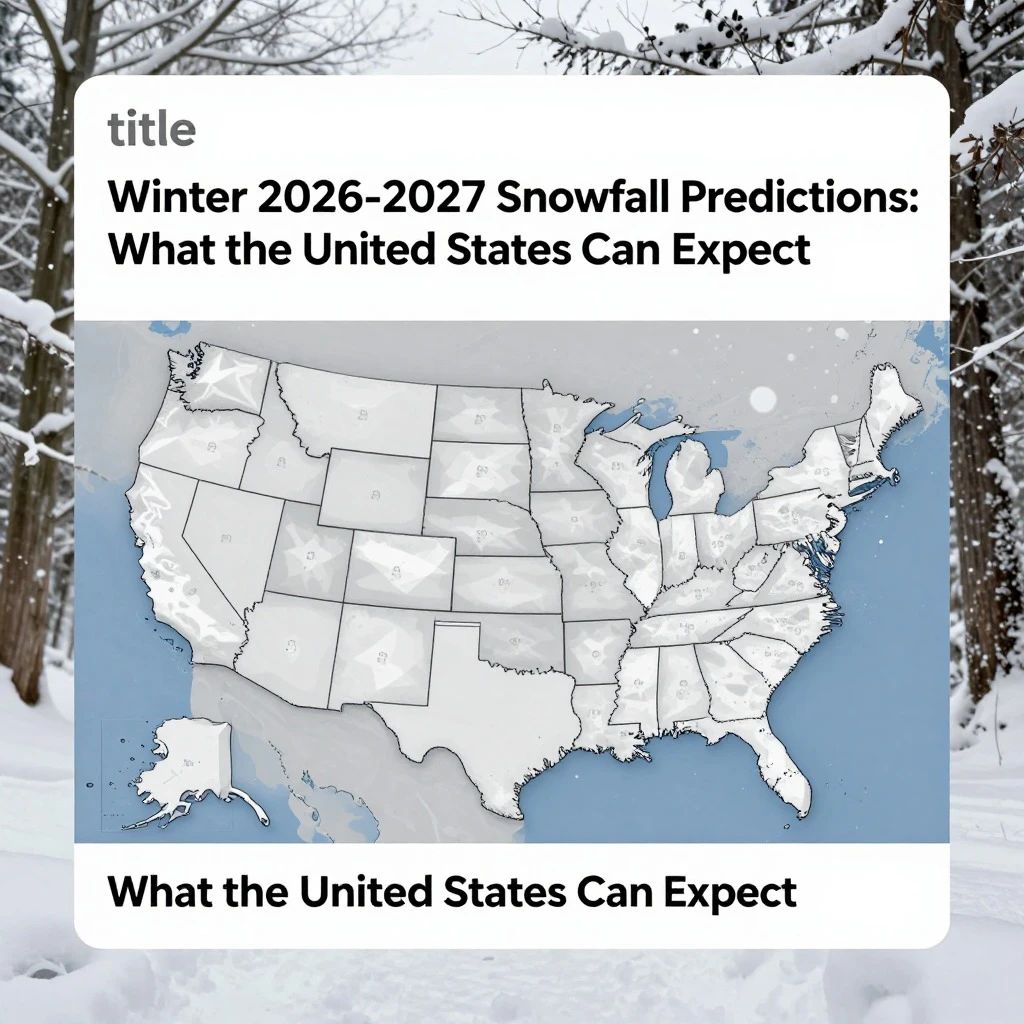
As the winter of 2026-2027 approaches, meteorologists and climate scientists are closely monitoring atmospheric patterns to forecast snowfall across the United States. While long-range predictions are inherently uncertain, early signals suggest a winter that could bring significant regional variations. The National Oceanic and Atmospheric Administration (NOAA) and other forecasting agencies are pointing to the potential development of a weak La Niña, which often influences colder and snowier conditions in the northern tier of the country, while the southern states may experience milder and drier weather. However, these patterns are not absolute, and other factors such as the Arctic Oscillation and the Madden-Julian Oscillation could alter the outcome.nnFor the Northeast and Great Lakes regions, the 2026-2027 winter could bring above-average snowfall, particularly in areas prone to lake-effect snow. Cities like Buffalo, Syracuse, and parts of New England might see frequent snowstorms, with the possibility of a few major nor’easters. In contrast, the Midwest and Plains states are expected to experience a mix of cold snaps and milder periods, with snowfall totals near or slightly above normal. The Rocky Mountains and the Intermountain West are likely to see a robust snowpack, which is good news for ski resorts and water resources, but could also increase the risk of avalanches in backcountry areas.nnMeanwhile, the southern United States, from Texas to the Carolinas, may see below-average snowfall, with winter precipitation more likely to fall as rain. However, as seen in past winters, a single Arctic blast can bring unexpected snow and ice to these regions, causing significant disruptions. The Pacific Northwest is forecast to have a mixed bag, with coastal areas seeing more rain than snow, while higher elevations in the Cascades could receive substantial snowfall. Climate change continues to play a role, with warming trends potentially reducing the duration of snow cover in some areas, but also increasing the intensity of individual snowstorms due to increased moisture in the atmosphere.nnWhile these predictions provide a general outlook, it is crucial to remember that winter weather is highly variable, and long-range forecasts can change as the season approaches. Residents and businesses in snow-prone areas should prepare for a range of possibilities, from mild to severe. Staying informed through local weather services and updating emergency kits are prudent steps. As the season unfolds

 Shimanta Das