Unveiling the Secrets of the Median Tectonic Line: New Insights into Japan’s Giant Fault
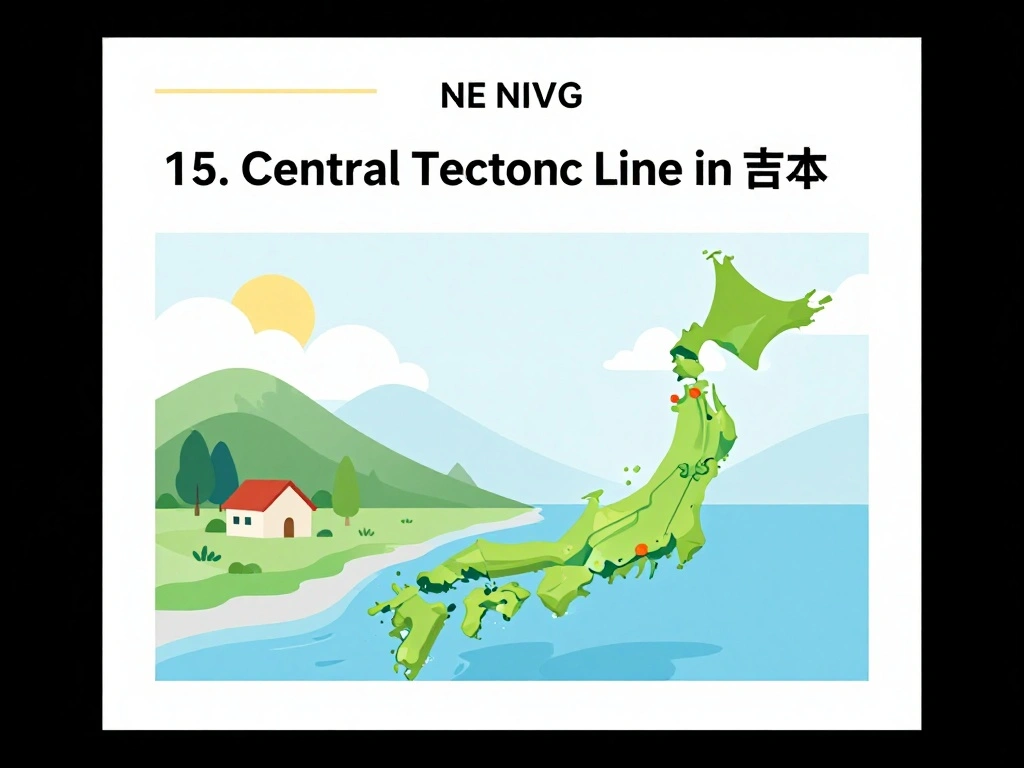
The Median Tectonic Line (MTL) in Japan is one of the world’s most significant active fault systems, stretching across the island of Honshu and known for its potential to generate devastating earthquakes. Recent research has shed new light on the formation and evolution of this massive fault, offering insights that could reshape our understanding of similar structures globally.
A groundbreaking study published in Tectonophysics in February 2023 by a team from Hokkaido University and Hiroshima University has unraveled the mystery of how the MTL matured. The researchers focused on mylonite belts—rocks that have undergone ductile deformation—along the MTL in western Mie Prefecture. They identified three distinct mylonite zones, each with different protoliths and quartz microstructures, separated by reverse faults. By analyzing deformation temperatures, they discovered that the zones cooled and deformed sequentially from top to bottom, with the lowest zone remaining active the longest. This process led to the localization of strain and the eventual formation of the MTL as a brittle fault.
This finding is crucial because it explains how large inland faults like the MTL develop over time. The MTL is not only a geological marvel but also a significant hazard. The 1995 Great Hanshin earthquake, which struck Kobe, occurred on the Nojima Fault, a branch of the MTL. The fault zone is closely monitored, and understanding its history helps seismologists assess future risks.
The research provides a new model for the evolution of giant continental faults, such as the North Anatolian Fault in Turkey and the San Andreas Fault in the United States. By revealing the strain localization process in the ductile regime, this study offers a framework to interpret the development of similar structures worldwide, potentially improving seismic hazard assessments and our understanding of plate tectonics.

 Shimanta Das