Trump Tariffs Live: New Duties Target China, India, EU
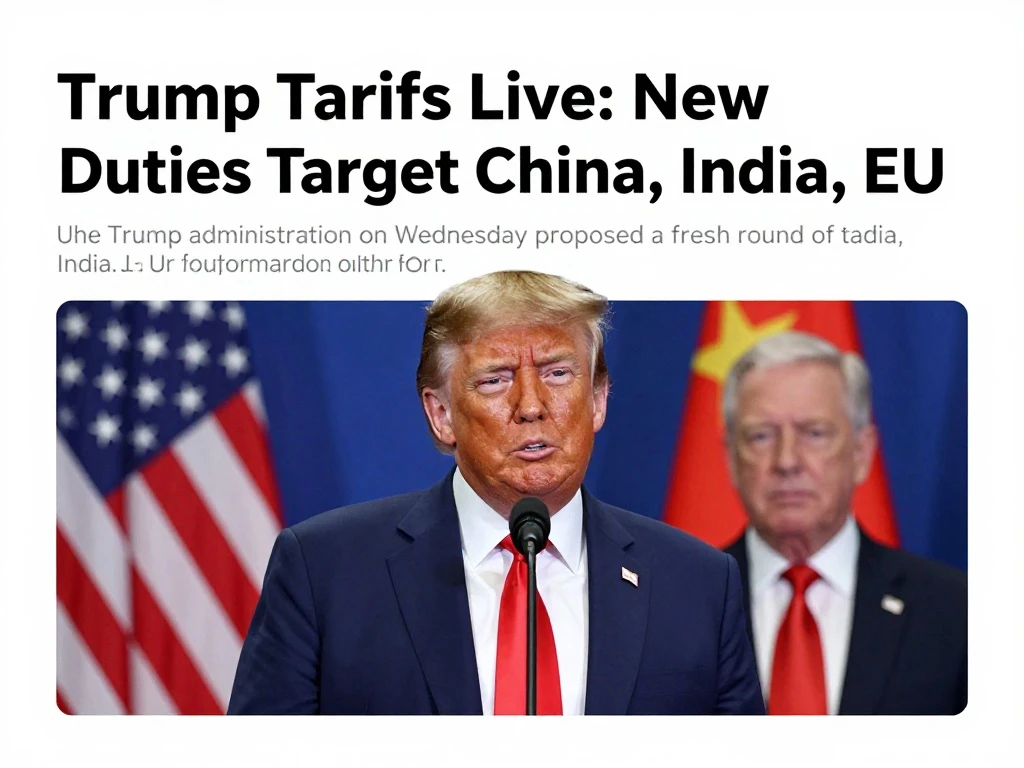
The Trump administration on Wednesday proposed a fresh round of tariffs targeting 14 major US trading partners, including China, Japan, India, and the European Union. According to a senior US official, the targeted countries have excessive manufacturing capacity that is hurting American businesses. The move marks another escalation in the administration’s aggressive trade policy, which has already seen multiple rounds of duties imposed on allies and rivals alike.
The proposal comes as the administration prepares to impose new trade tariffs on 16 major partners, including India, under a legal provision that could help revive much of its tariff programme after the Supreme Court struck down its earlier global duties, as reported by The Wall Street Journal and Reuters. The legal basis for the new tariffs is linked to the Supreme Court’s Major Questions Doctrine, which requires the executive branch to demonstrate clear congressional authorisation for actions of extraordinary economic or political significance. This doctrine has been a stumbling block for the administration’s previous tariff efforts, but officials believe the new approach may pass legal muster.
However, there is an important counterargument. Critics argue that the administration is stretching its executive authority beyond what Congress intended. They point out that the Constitution grants Congress the power to regulate commerce with foreign nations, and that the Major Questions Doctrine was designed precisely to prevent such broad unilateral actions. The debate over the legality of these tariffs is likely to intensify as the new measures take effect.
Meanwhile, the political landscape has shifted dramatically. Democrats have secured at least 259 House seats and a 56-seat Senate majority, giving them control of key committees, including the House Ways and Means Committee and the Senate Finance Committee, which oversee trade policy. This means that the administration’s tariff plans will face heightened scrutiny from lawmakers who may oppose the president’s trade agenda. Democrats have already signalled that they will use their oversight powers to challenge the tariffs, potentially complicating their implementation.
The administration accuses the targeted countries of flooding world markets with cheap goods, a practice it says undermines US manufacturing and jobs. The tariffs are intended to level the playing field and protect American industries. But economists warn that such measures could lead to retaliatory actions from trading partners, escalating into a full-blown trade war
 Shimanta Das