
Switzerland’s Air Quality in Focus: Real-Time Data, Trends, and Solutions
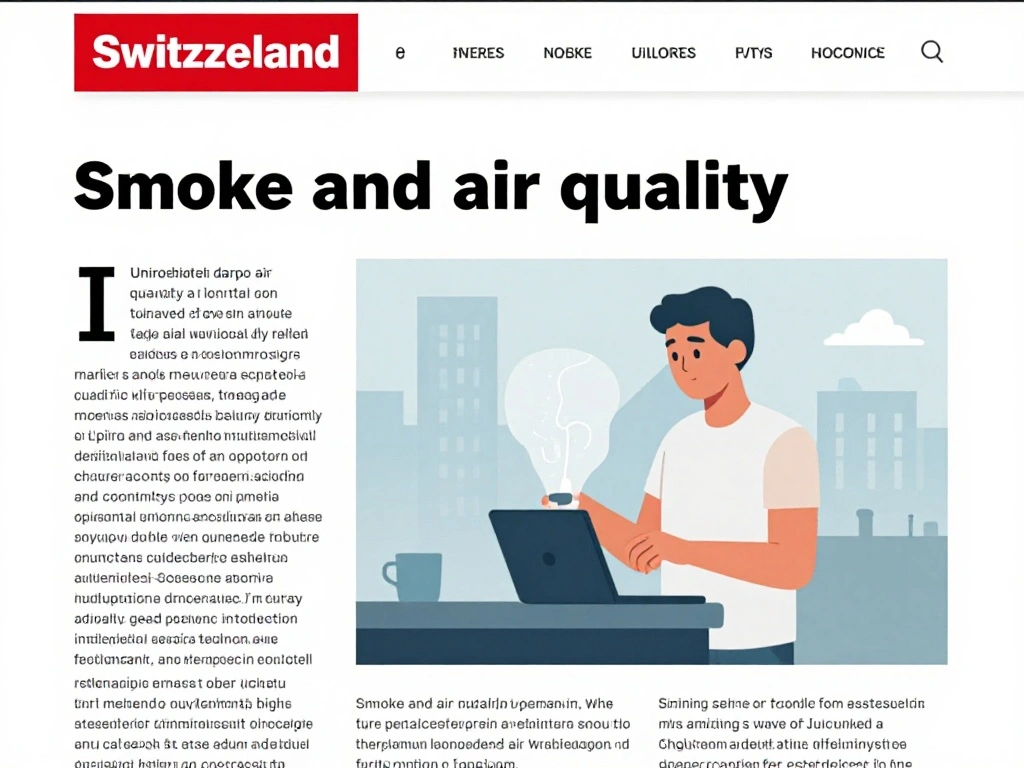
Switzerland is renowned for its pristine landscapes, but air quality remains a pressing concern, especially in urban centers. The National Air Pollution Monitoring Network (NABEL), alongside cantonal and urban networks, provides real-time and historical data on key pollutants such as PM10, NO₂, and O₃. Currently, Geneva reports a PM2.5 level of 4.5 µg/m³, which falls within the “Good” category (0–50). However, even moderate levels (51–100) can pose health risks for sensitive individuals. The most polluted cities in 2026 are being closely tracked, with real-time indices helping residents and authorities respond promptly.
Real-time data from NABEL and local networks serves as the foundation for air quality modeling across Switzerland. These measurements allow for accurate forecasting and public health advisories. For instance, current readings show PM10 at 11 µg/m³, NO₂ at 11 µg/m³, and O₃ at 35 µg/m³—all within safe limits. Yet, seasonal variations and traffic emissions can cause spikes, particularly in winter when temperature inversions trap pollutants. The data query tool for NABEL enables access to historical records from 2000 onward, supporting long-term trend analysis and policy evaluation.
To combat pollution, Switzerland is exploring innovative air quality solutions. These include expanding monitoring networks, promoting electric mobility, and implementing low-emission zones in cities like Zurich and Basel. Key applications for tracking and improving air quality include mobile apps that provide real-time alerts and personalized exposure reports. For example, the IQAir platform offers city-by-city comparisons and solutions for clean air, such as air purifiers and mask recommendations. The goal is to reduce average PM2.5 levels to below 5 µg/m³, aligning with WHO guidelines.
Public awareness and data transparency are crucial. The Swiss government encourages citizens to use real-time air quality indices to plan outdoor activities, especially for vulnerable groups like children and the elderly. With continuous monitoring and proactive measures, Switzerland aims to maintain its reputation for clean air while addressing urban pollution hotspots. By leveraging technology and community engagement, the country is setting a benchmark for sustainable air quality management.

 Shimanta Das