Swiss Farmers Face New Weather Rules as Drought Emergency Measures Take Effect
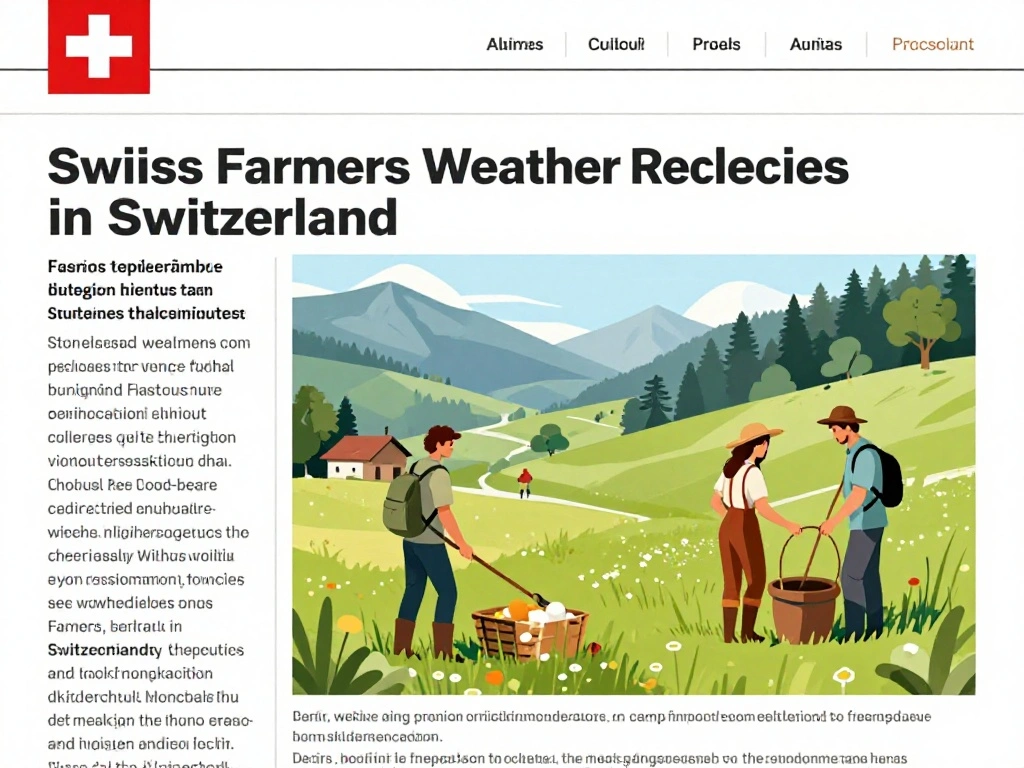
In response to persistent drought conditions, the Swiss canton of Neuchâtel has enacted emergency measures to support local farmers. These measures, which include permitting grazing on extensive low-intensity grassland, buffer strips adjacent to hedgerows, and riparian grassland (with a few exceptions), aim to provide immediate relief. This move highlights the growing pressure on Swiss agriculture due to climate change, as farmers grapple with water scarcity and altered growing conditions.
Christian Hofer, Director of the Federal Office for Agriculture (BLW), emphasizes that the agency is in constant dialogue with cantons and farmers’ associations. He notes that the impacts of a changing climate are not new, and the BLW has been implementing long-term strategies to address them. These strategies include investing in digital technologies and big data to develop decision-support models for the agricultural sector. Such tools are crucial for understanding future climate-driven stressors and guiding the transition to more sustainable and resilient food systems.
However, the adoption of digital technologies in agriculture is still in its infancy, particularly for policy-making. The current emergency measures, while necessary, underscore the urgent need for proactive adaptation. The cost of monitoring and technology is a factor: each sensor used for data collection costs about 1,500 francs, with annual maintenance adding roughly 100 francs. This investment is part of a broader effort to provide science-based solutions that can help farmers navigate an increasingly unpredictable climate.
As Switzerland prepares for potentially severe droughts in the future, the combination of immediate relief measures and long-term technological investment is essential. The situation in Neuchâtel serves as a microcosm of the challenges facing agriculture worldwide, where climate change threatens food production and rural livelihoods. By fostering collaboration between government, farmers, and researchers, Switzerland aims to build a more resilient agricultural sector that can withstand the impacts of a warming planet.

 Shimanta Das