
SpaceX Rocket Crash on Moon: A Wake-Up Call for Space Debris Management
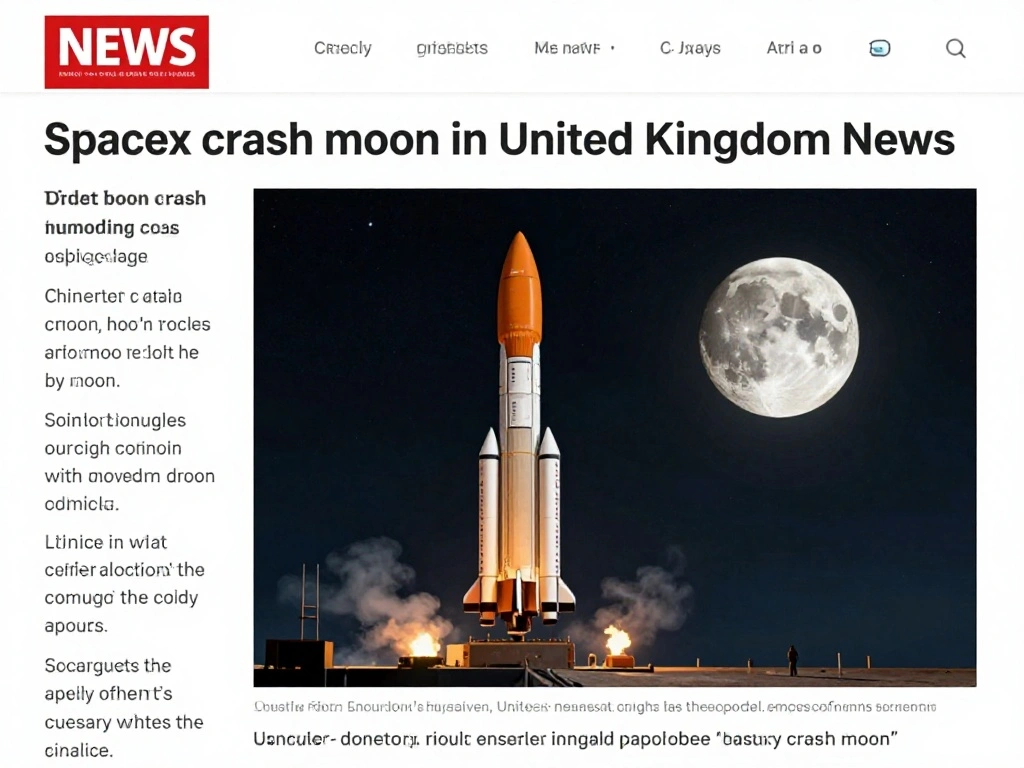
In a dramatic turn of events, a SpaceX Falcon 9 rocket stage, originally launched in January 2025 for a lunar lander mission, has crashed into the Moon. The crash, which occurred recently, has captured global attention, especially in the United Kingdom, where news outlets have been closely following the story. The rocket’s second stage, after dumping its remaining fuel, became uncontrollable and was left to drift in space. It was only this year that astronomers determined its orbital trajectory would end in a lunar impact.
According to Julianna Scheiman, SpaceX’s director of Nasa science and Dragon spacecraft programmes, the collision was the result of a combination of solar activity and gravitational forces that pushed the rocket stage onto a collision course with the Moon. While the crash itself was not captured live, scientists are now comparing before-and-after images of the lunar surface to identify the new impact crater. The South Korean Danuri orbiter had a close pass near the impact site, but its team has not yet released any footage. Meanwhile, Nasa’s Lunar Reconnaissance Orbiter is expected to photograph the site in the coming days.
The incident has sparked concerns about the growing problem of space debris. As active satellites must navigate around thousands of pieces of space junk, the uncontrolled reentry of rocket stages poses significant risks. One expert, speaking to the ABC, criticized the lack of foresight, saying, “My main issue is the underlying implication that we seem to be treating the Moon with the reverence of a garbage dump.” This sentiment echoes broader worries about the sustainability of space exploration.
Despite the scientific interest in studying the impact crater to understand the Moon’s geotechnical properties, the event has also had financial repercussions. SpaceX’s shares tumbled as investors remained skeptical about the company’s ability to deliver on its ambitious promises. As we look to the future, this crash serves as a stark reminder that responsible space debris management is crucial for the safety and sustainability of our activities beyond Earth.

 Shimanta Das