Sigfrido Ranucci and Selvaggia Lucarelli: A Clash Over Investigative Journalism in Italy
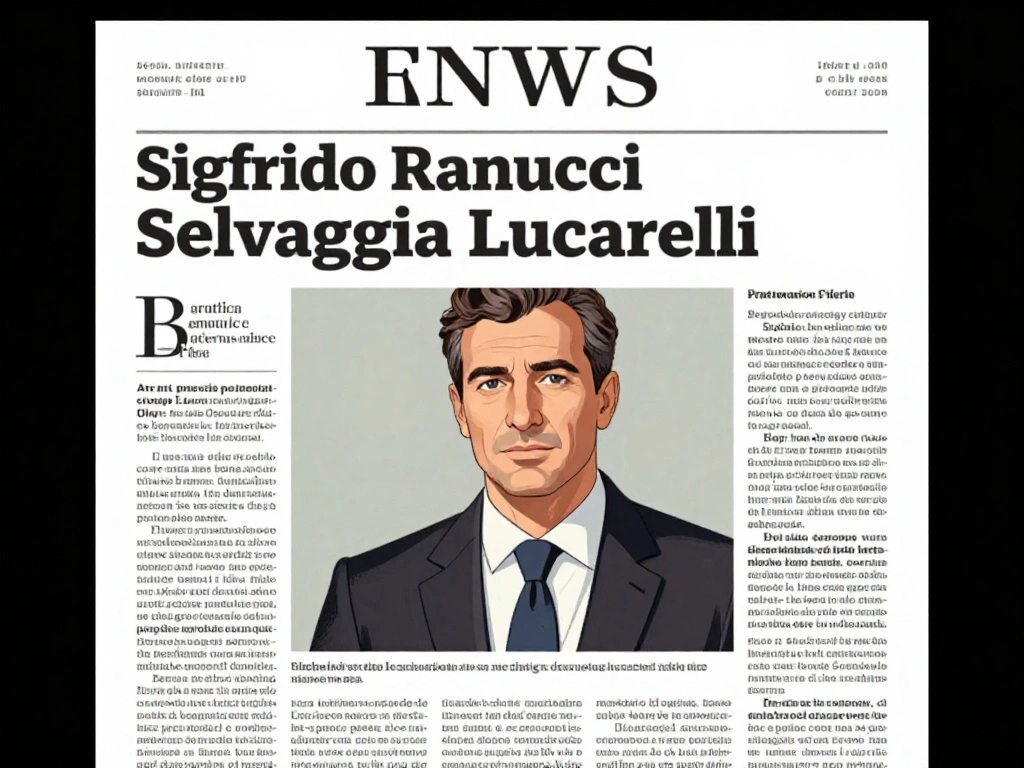
The Italian media landscape has been shaken by a heated controversy involving two prominent figures: Sigfrido Ranucci, the host of Rai’s investigative program ‘Report’, and journalist Selvaggia Lucarelli. The dispute, which has unfolded across newsletters and public statements, touches on the core principles of investigative journalism, the integrity of media personalities, and the blurred lines between personal relationships and professional conduct.
Lucarelli, known for her sharp commentary, has leveled serious accusations against Ranucci. In her Substack newsletter ‘Vale Tutto’, she alleged that Ranucci wrote a self-review of his own book, ‘La Scelta’, on Amazon under a false name. Lucarelli described the review as ‘naive and overflowing with enthusiasm’, implying that it was an attempt to artificially boost his work. This accusation, though seemingly minor, has sparked a broader debate about authenticity and ethics in the digital age, where even journalists may resort to questionable tactics to promote their projects.
Beyond the book review, Lucarelli’s critique extends to Ranucci’s professional conduct. She highlighted his relationships with interns and sources, the construction of the ‘Report’ brand as inseparable from his persona, and notably, his friendship with Valter Lavitola, a figure with a controversial past. These points, as outlined in her newsletter, suggest a pattern of behavior that could compromise the independence and impartiality expected of an investigative journalist. Lucarelli argues that such entanglements undermine the credibility of ‘Report’ and the broader mission of journalism to hold power accountable without fear or favor.
In response, Ranucci has defended his work and dismissed the allegations, but the controversy has raised important questions about the nature of investigative journalism in Italy. Lucarelli’s insistence on separating the value of journalistic work from unresolved personal and professional issues resonates with many, yet her approach has also been criticized for potentially reducing complex matters to personal attacks. The mechanism she describes, where any critical voice is labeled as a ‘foe’ and arbitrarily categorized by political alignment, highlights a troubling trend in media discourse. As this saga continues to unfold, it serves as a reminder of the delicate balance between personal integrity and professional duty, and the need for transparency and accountability in the media industry.
 Shimanta Das