
Severe Thunderstorm Watch in the United States: Understanding the Risks and Staying Safe
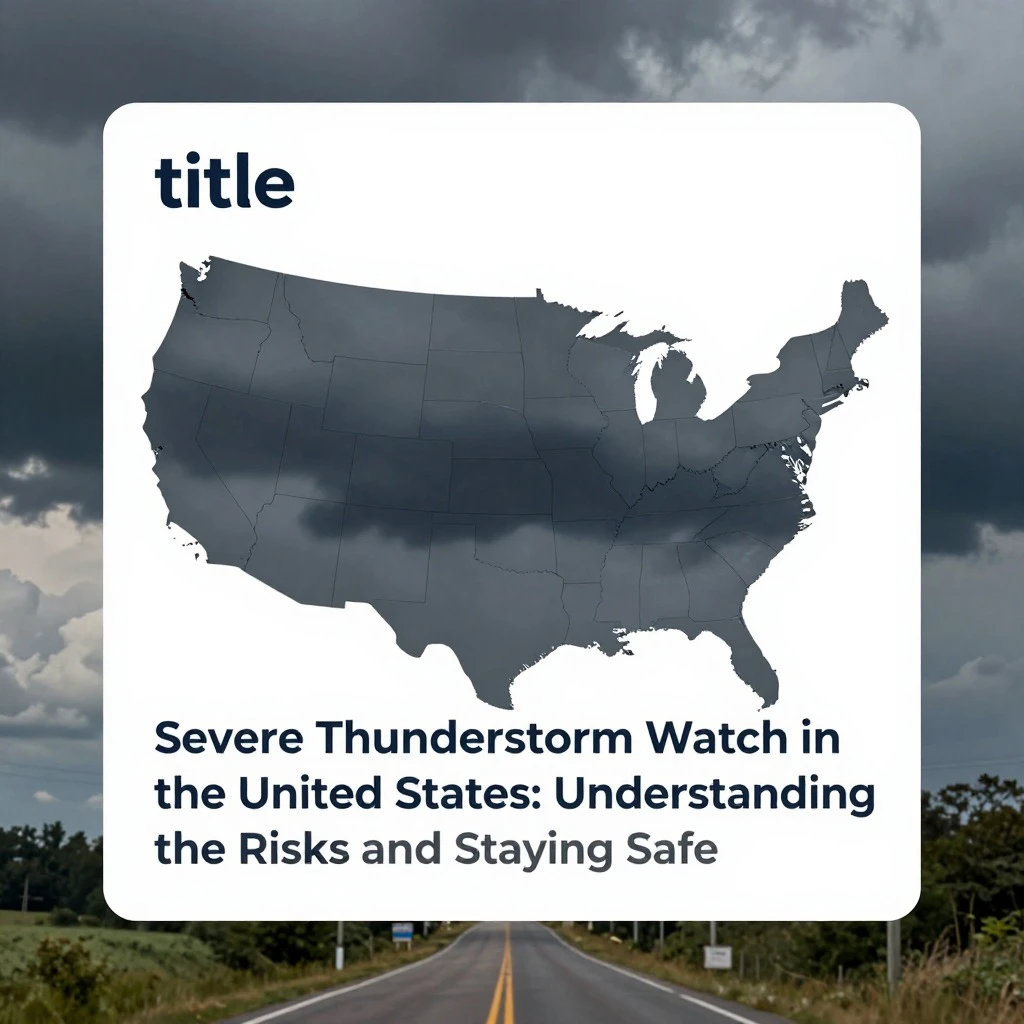
A severe thunderstorm watch is a critical alert issued by the National Weather Service (NWS) when conditions are favorable for the development of severe thunderstorms in and near the watch area. These storms can produce damaging winds of at least 58 mph, hail of one inch in diameter or larger, and even tornadoes. The watch is not a warning; it means that you should be prepared to act if a warning is issued. Understanding the difference between a watch and a warning is essential for your safety. A watch means ‘be ready,’ while a warning means ‘take action now.’nnWhen a severe thunderstorm watch is in effect, it is crucial to stay informed and monitor local weather updates. Have multiple ways to receive alerts, such as a NOAA weather radio, smartphone apps, or local news. Secure outdoor items that could become projectiles in high winds, and ensure your emergency kit is stocked with essentials like water, non-perishable food, flashlights, and batteries. If you are caught outdoors, seek shelter in a substantial building or a hard-topped vehicle with windows closed. Avoid open fields, high ground, and tall objects like trees or utility poles.nnSevere thunderstorms can cause significant damage, including downed power lines, structural damage, and flash flooding. In the United States, these storms are most common in the spring and summer months, particularly in the central and southern plains, known as ‘Tornado Alley,’ and the southeastern states. However, they can occur anywhere and at any time. The NWS uses advanced radar and storm spotter reports to issue watches and warnings, but the ultimate responsibility for safety lies with individuals and communities. Preparation and awareness are your best defenses against the dangers of severe thunderstorms.nnIn addition to physical safety, severe weather can have long-lasting impacts on communities, including power outages and disruption of services. It is wise to have a family emergency plan that includes communication strategies and a designated safe meeting place. After the storm passes, be cautious of hazards such as downed power lines, broken glass, and weakened structures. Report any damage to local authorities and avoid driving through flooded areas, as just six inches of water can cause vehicles to lose control. By understanding the risks and taking proactive steps, you can protect yourself, your loved ones, and your

 Shimanta Das