Mount Etna’s Latest Eruption: Activity Decreases but Alert Remains
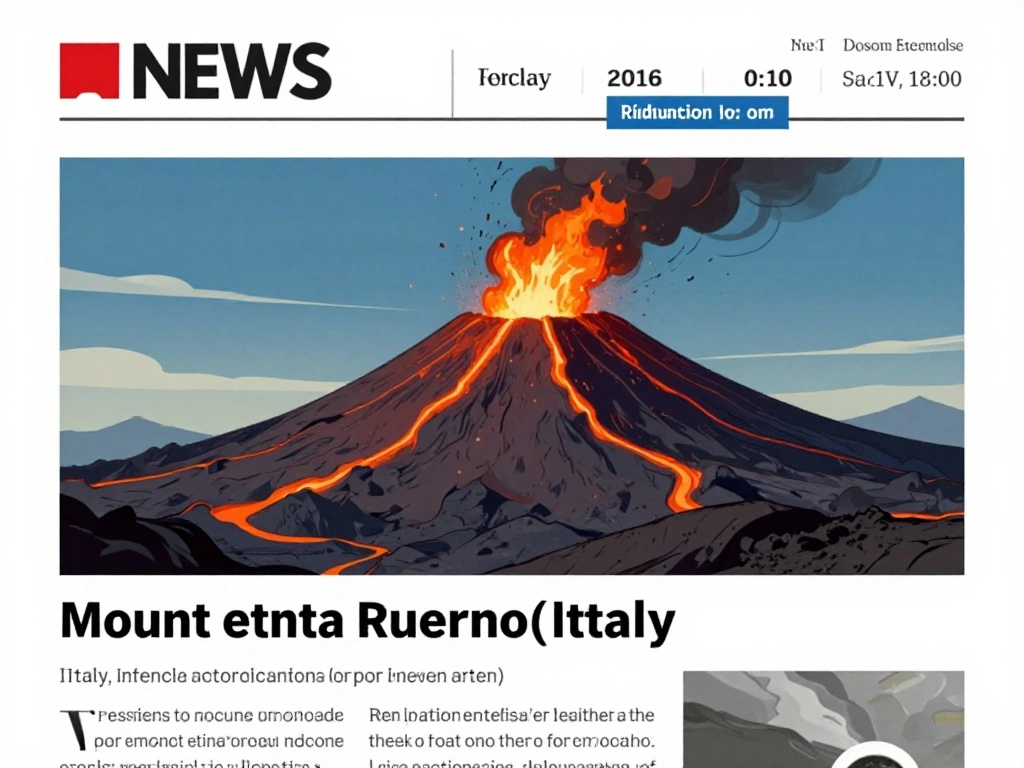
Mount Etna, Europe’s most active volcano, has shown a significant decrease in activity as of the morning of August 12, 2026. According to the latest updates from the INGV Catania thermal webcam, both lava effusion and ash emissions have dropped considerably. However, volcanic tremor remains high, indicating that the volcano is still restless beneath the surface. The alert level has been maintained at Yellow, the second lowest on a four-level scale, as advised by the Dipartimento della Protezione Civile.
The recent eruption saw a dramatic increase in ash emission, which fueled a cloud reaching approximately 7 kilometers above sea level. This cloud has been spreading toward the western quadrant of the volcano. Since around 10:30 local time, Strombolian activity has gradually decreased and is now very modest, while intense ash emission continues. The average amplitude of volcanic tremor, after an initial increase, rapidly decreased starting around 10:00 local time but remains in the high range.
The ash plumes have had practical consequences for the region. Steady southeast winds have been blowing ash toward the international airport in Catania, a major port city at Etna’s base, causing disruptions. Some of the ash has also drifted south across the Mediterranean towards Malta, where significant delays and some cancellations have been reported. This highlights the far-reaching impact of Etna’s activity beyond the immediate vicinity of the volcano.
Etna is known for its near-continuous activity, with major paroxysmal events occurring every few months to every few years. These events are characterized by high lava fountains, significant ash columns, and major lava flows. Historic eruptions include the devastating 1669 flank eruption that destroyed villages and part of Catania, and the spectacular 1787 summit eruption with lava fountains reportedly up to 3000 meters high. While the current activity has decreased, the high tremor suggests that the situation could change rapidly, and authorities remain vigilant.

 Shimanta Das