Italy’s Political Landscape: Navigating Transatlantic Tensions and Domestic Reforms
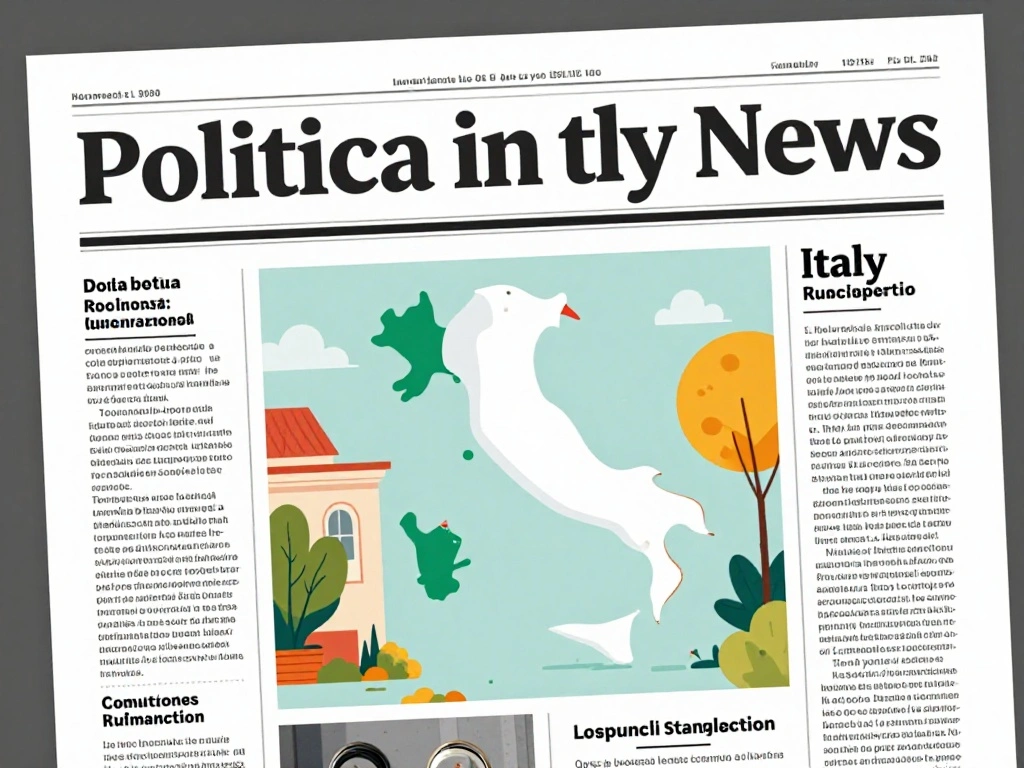
In the ever-evolving arena of Italian politics, recent developments highlight a delicate balance between international relations and domestic priorities. Foreign Minister Antonio Tajani’s dismissal of former U.S. President Trump’s social media jab at Prime Minister Giorgia Meloni underscores Rome’s commitment to stable transatlantic ties. Tajani emphasized that ‘transatlantic relations go far beyond individual statements,’ signaling a pragmatic approach to diplomatic discourse. This incident, while capturing headlines, is but a fragment of a broader political narrative that includes significant legislative and economic initiatives.
Domestically, the Italian government is pushing forward with a series of reforms aimed at stimulating economic growth and enhancing public welfare. A key proposal from Deputy Prime Minister Matteo Salvini calls for banks to contribute 5% of their profits to support the economy, a move that has sparked debate among financial institutions and policymakers. Simultaneously, the government is advancing measures to simplify VAT refunds for businesses and self-employed individuals, potentially easing administrative burdens for nearly 460,000 entities. These initiatives reflect a concerted effort to channel savings into productive investments, as highlighted by economic analyst Michela Finizio, who stresses the importance of directing European and Italian savings toward growth-oriented ventures.
Beyond economic policy, the political agenda includes social and judicial reforms. The Chamber of Deputies recently approved the establishment of a day to commemorate Enzo Tortora and victims of miscarriages of justice, a significant step in acknowledging past judicial errors. Additionally, the Senate has greenlit a hunting bill that updates regulations on firearms and suspension periods, showcasing the government’s ability to address diverse legislative matters. These actions demonstrate a proactive stance on issues ranging from legal accountability to individual rights, reflecting a multifaceted approach to governance.
As Italy navigates these complex political waters, the public’s response remains a critical barometer. Voter turnout and reactions to government decisions are closely monitored, with analysts like Roberto D’Alimonte examining the motivations behind electoral participation. The government’s ability to balance international pressures with domestic needs will likely shape its trajectory in the coming months. With a focus on economic revitalization, judicial reform, and social policy, Italy’s political landscape is poised for continued evolution, underscored by a commitment to addressing both immediate concerns and long-term strategic goals.
 Shimanta Das