
Buck Moon 2026: When and How to See July’s Full Moon in Australia
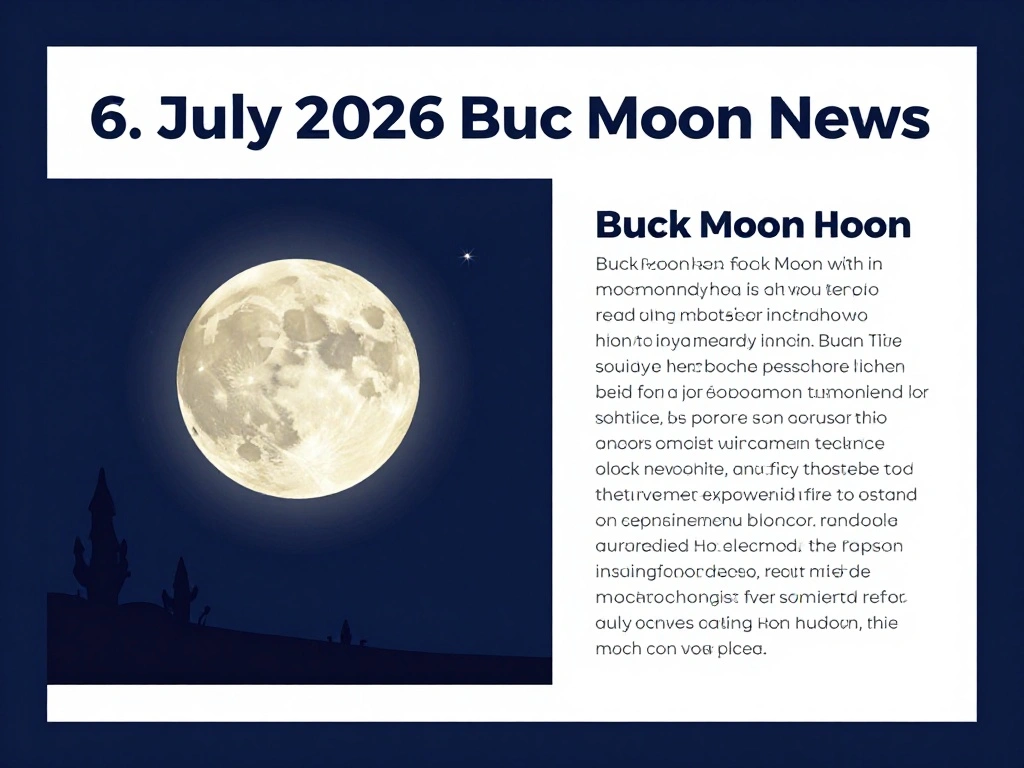
July’s full moon, known as the Buck Moon, will reach peak illumination on 6 July 2026. While the name originates from North American traditions—marking the time when male deer grow new antlers—it is now widely used across the globe, including Australia, to track monthly lunar cycles. This year’s Buck Moon is classified as the second-highest and dimmest full moon of the year, but it will still be bright enough to enjoy with the naked eye under clear skies.
For the best viewing experience in Australia, head away from city lights. If you are in Melbourne or surrounding regions in Victoria, find a dark park, elevated lookout, or rural area to avoid urban light pollution. No telescopes or binoculars are needed—just clear skies and an open view. Check local weather forecasts to ensure clouds do not spoil the spectacle. The exact moment of full illumination occurs at specific times across Australian time zones (e.g., 10:37 a.m. AEST on 6 July), but the moon will appear full for a day or two around that date.
The Buck Moon is more than just a bright night-sky feature; it serves as an important celestial marker. It arrives just two weeks before a total solar eclipse on 22 August 2026, which will be visible from parts of Australia. During the partial phases of that eclipse, certified eclipse glasses or solar filters are essential for safe viewing. Additionally, July’s night sky will host two meteor showers and several planet pairings, making it one of the best stargazing stretches of the year.
Whether you are a seasoned astronomer or a casual observer, the Buck Moon offers a perfect opportunity to connect with the cosmos. Mark your calendar for 6 July 2026, find a dark spot, and enjoy the second-highest full moon of the year—no equipment required.

 Shimanta Das