Bolsonaro Concedes Brazil Election After Lula Wins by 4.5 Million Votes
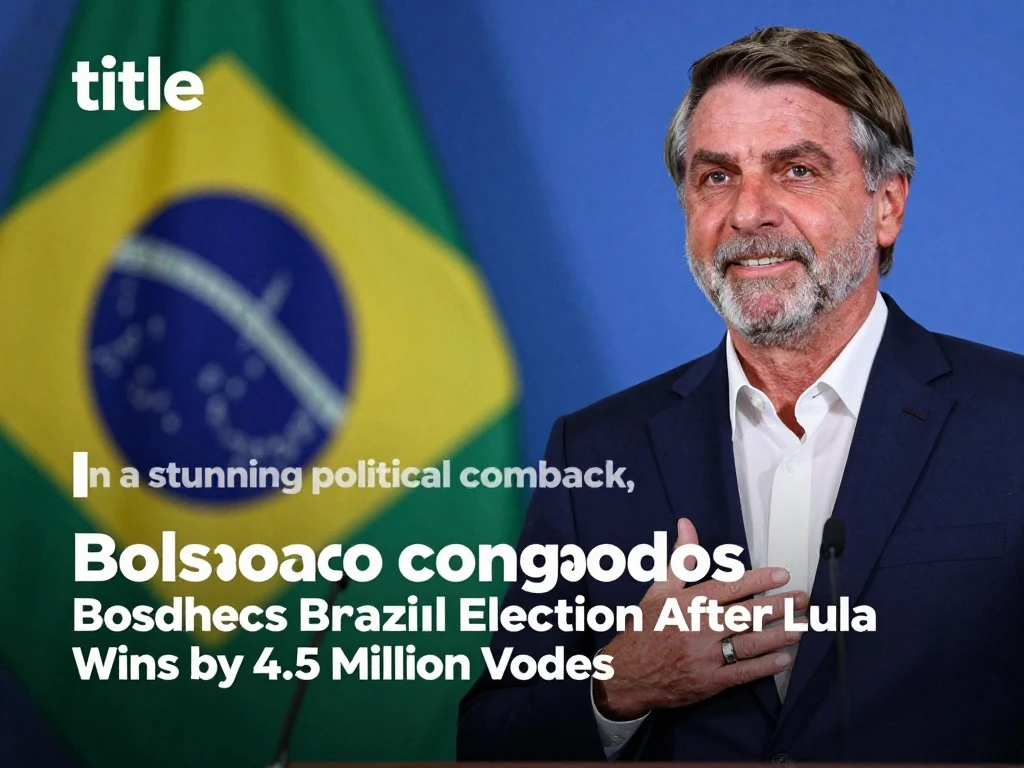
In a stunning political comeback, Luiz Inácio Lula da Silva has won Brazil’s presidential election, defeating incumbent Jair Bolsonaro by a margin of nearly 4.5 million votes. With all ballots counted, Lula secured 51.8% of the vote, while Bolsonaro received 48.2%. The result marks a major shift in Brazilian politics and halts a run of right-wing electoral victories in Latin America. However, the aftermath was not without controversy: Bolsonaro’s son, Flávio, called for the results to be annulled, alleging that voting rules were changed during the process—a claim that has raised concerns about the integrity of the electoral system.
Lula’s victory was propelled by gains in major cities, including Rio de Janeiro and São Paulo, where he outperformed his first-round showing. Support from younger, older, and working-class voters also proved crucial. The win represents a remarkable turnaround for Lula, who trailed Bolsonaro in the first round. His campaign successfully learned lessons about communicating with voters, particularly through social media, as noted by analysts. On election day, the Supreme Court ordered polling stations to remain open for two additional hours until 7 p.m., a decision that may have influenced turnout and the final outcome.
Despite Lula’s presidential win, Bolsonaro’s Liberal Party made significant gains in Congress, leaving the new president facing a conservative opposition and a deeply divided electorate. This political dynamic could complicate Lula’s ability to govern effectively. Financial markets reacted negatively to the outcome: Brazilian companies listed on the stock exchange sold off, and banking stocks are expected to be hit by the risk that interest rates remain higher for longer, delaying the normalization of banks’ asset quality, according to Citi analysts. The economic uncertainty reflects investor concerns over policy direction under a Lula administration.
Bolsonaro’s concession—though initially ambiguous—came after his son’s call for annulment, which was widely seen as an attempt to undermine the democratic process. The Supreme Court’s intervention to extend voting hours was a response to logistical challenges, but it also became a flashpoint for baseless allegations. Ultimately, the election results stand, and Lula’s victory is a testament

 Shimanta Das