
Blood Moon Over Britain: UK Skywatchers Capture Stunning Lunar Eclipse
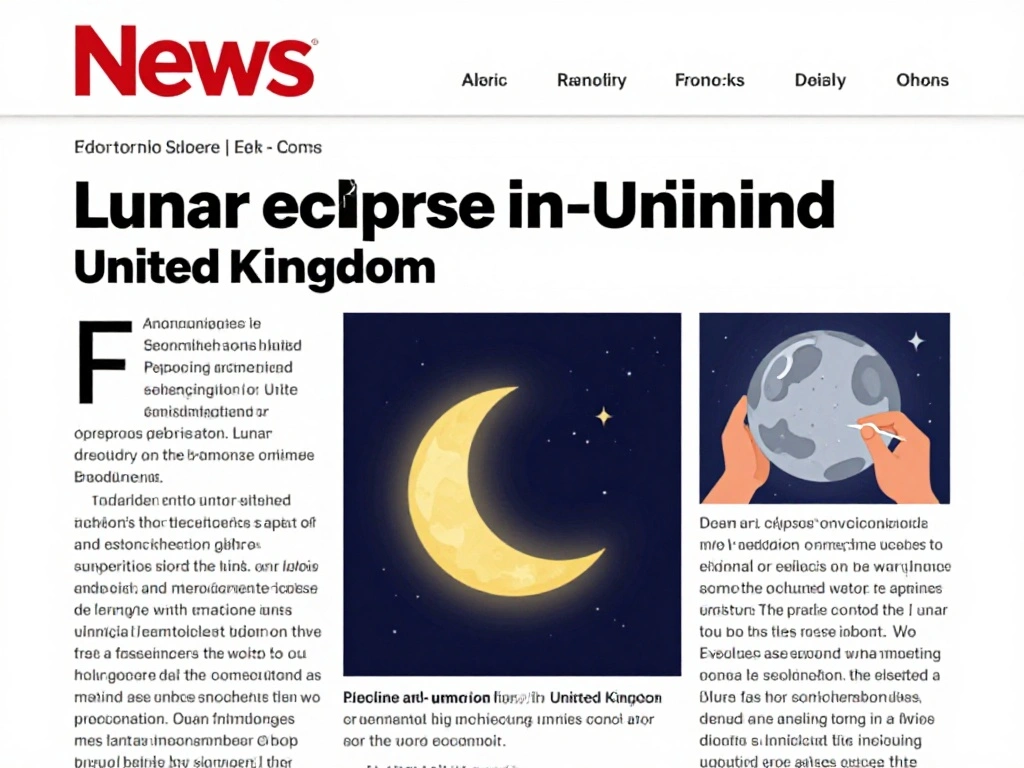
Skywatchers across the United Kingdom were treated to a spectacular celestial display as a total lunar eclipse, popularly known as a ‘Blood Moon’, graced the pre-dawn sky on Friday, 14 March 2025. The event, which began shortly before 04:00 GMT, was captured in stunning detail through a series of photographs and videos shared across social media. A remarkable timelapse clip recorded the moment Earth’s shadow began to creep across the Moon, making it appear as though a bite had been taken out of our lunar satellite. This rare spectacle was the first total lunar eclipse visible from the UK since 2022, drawing amateur and professional astronomers alike to witness the breathtaking phenomenon.
But why does the Moon turn a reddish hue during a total lunar eclipse? The answer lies in the way Earth’s atmosphere interacts with sunlight. As sunlight passes through our atmosphere, it scatters more of the shorter blue wavelengths, while the longer red wavelengths are refracted and bent toward the Moon. This process, known as Rayleigh scattering, is the same reason sunsets appear red. During a lunar eclipse, the only light reaching the Moon’s surface is this filtered red light, casting an eerie, coppery glow that has fascinated humanity for centuries. The nickname ‘Blood Moon’ perfectly captures this dramatic transformation.
For UK observers, the eclipse on Sunday, 7 September 2025, offered another chance to witness this awe-inspiring event, as the Moon rose above the horizon already in the throes of totality. This timing provided a unique opportunity for photographers to capture the deep red Moon alongside familiar landmarks, creating striking images that highlighted the beauty of both the celestial and terrestrial worlds. The event also served as a reminder of the ancient traditions of naming full moons, which were often tied to seasonal changes and significant events. The Blood Moon, in particular, has long been associated with folklore and superstition, but modern science has given us a clear understanding of this natural wonder.
For those who missed these recent eclipses, there is good news: lunar eclipses are not as rare as they might seem, and the next one visible from the UK is likely to occur within a few years. To stay updated on future celestial events, consider signing up for stargazing newsletters or following astronomy channels. Whether you

 Shimanta Das