
{
“title”: “Lake Constance Earthquake and Germany’s Water Crisis: A Tale of Two Disasters”,
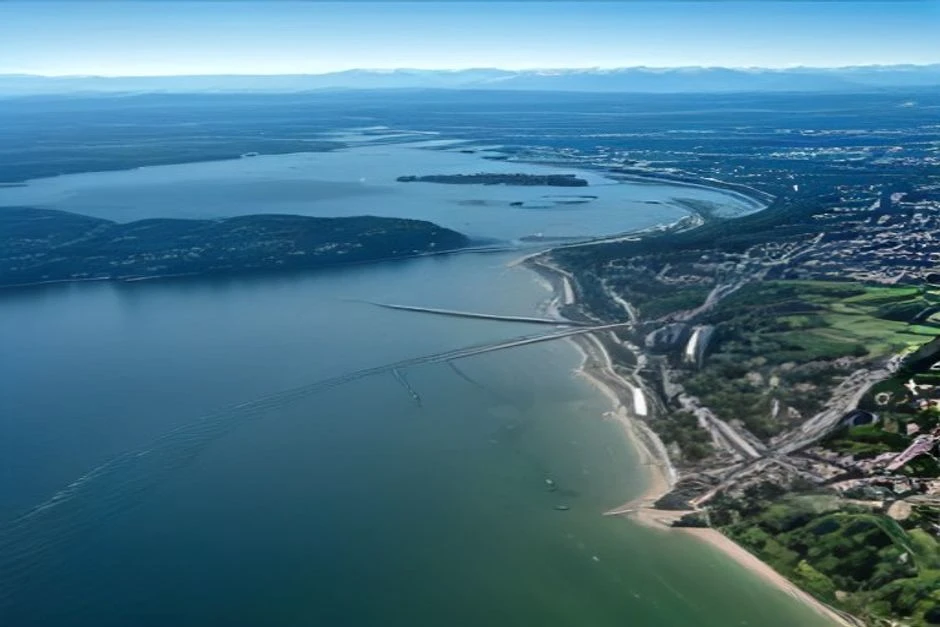
“content”: “In a dramatic turn of events, a large waterspout formed over Lake Constance near the southern city of Friedrichshafen, capturing the attention of locals and tourists alike. While waterspouts are not earthquakes, this rare meteorological phenomenon over one of Germany’s largest lakes has drawn comparisons to the seismic events that occasionally rattle the region. The spectacle, though awe-inspiring, serves as a stark reminder of the powerful natural forces at play in the area. However, the real crisis looming over Germany’s waterways is not a sudden tremor but a slow-burning disaster: a severe water shortage that is gripping the nation in 2026.nnGermany is currently grappling with an unprecedented water crisis, marked by critically low water levels across major lakes and rivers. This alarming situation is not confined to a single region but is a nationwide phenomenon, with 76% of measurement points in Baden-Württemberg reporting extremely low water levels. The impact is far-reaching, posing significant challenges to shipping, logistics, industry, and agriculture. The Rhine, a vital artery for trade, has seen reduced navigability, forcing barges to carry lighter loads, which in turn disrupts supply chains and increases costs. Farmers are struggling to irrigate crops, and industries reliant on water for cooling or production are facing operational constraints.nnThe crisis has exposed critical flaws in Germany’s water management strategies. The Federal Environment Agency has pointed to a significant implementation deficit in tackling these issues, indicating that existing plans and regulations are not being effectively enforced or updated to meet the challenges of climate change. The urgency of reforming water management comes amid other national concerns, but it remains a top priority given its widespread impact on the economy, environment, and daily life. Experts argue that a comprehensive approach is needed, including investment in water infrastructure, stricter conservation measures, and a shift towards more sustainable water use practices.nnAs the waterspout over Lake Constance dissipates, the underlying problem persists. The event, while visually striking, is a mere footnote in the larger narrative of Germany’s water woes. The country must act swiftly to address the implementation deficit and adapt to a future with less water. Otherwise, the consequences will be felt not just in the parched landscapes of Baden-Württemberg but across the entire nation, affecting everything from energy production to food security. The time for complacency is over

 Shimanta Das