
Germany Captivated by Partial Solar Eclipse on August 12, 2026
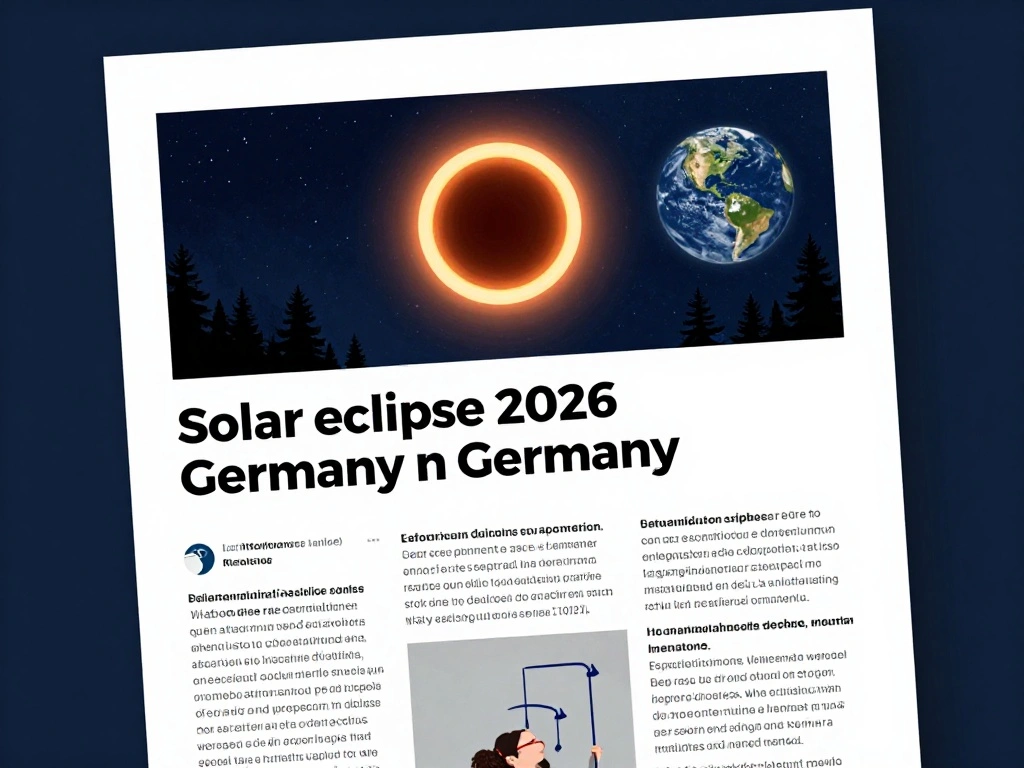
On the evening of August 12, 2026, Germany witnessed a remarkable partial solar eclipse, captivating millions of people nationwide. The astronomical event began in the far north at 19:11, reaching its peak in Munich at 19:23, with the moon covering up to 90% of the sun. In Berlin, hundreds gathered at prominent viewing spots such as the Zeiss Großplanetarium, which attracted around 3,000 spectators, prompting police presence to manage the crowds. The event was a spectacular display of nature, drawing both avid astronomers and casual onlookers alike.
According to astronomers, somewhere between 84 and 90 percent of the Sun will be covered at maximum, depending on where you are, leaving a narrow crescent behind. The weather, too, looks set to play along, ensuring clear views for most of the country. NASA also shared some tips on how to enjoy the event while remaining safe, emphasizing the importance of using proper eye protection to avoid damage. It will not go completely dark over Germany, but the eagerly awaited solar eclipse will still be well worth watching here on Wednesday evening.
This celestial event also serves as a reminder of how closely early societies tracked the sky for practical reasons, from predicting weather to marking the seasons through star patterns and lunar cycles. In many belief systems, the heavens were seen as home to gods with human-like traits, making sudden disruptions feel socially significant as well as physically alarming. Today, while we understand the science behind eclipses, they still evoke a sense of wonder and connection to the cosmos.
For those interested in further celestial observations, Mercury remains visible low in the early morning sky until mid-August, best glimpsed around 20 minutes after it rises at 4:55 a.m. Truly dark skies, like those above Chile’s Atacama Desert, remain rare, and even there the growing number of satellites is starting to interfere, drawing the eye away from the stars toward fast-moving points of light. Nonetheless, the solar eclipse of 2026 offered a unique opportunity for Germans to look up and marvel at the universe.

 Shimanta Das