Canada’s 2026 Solar Eclipse: A Partial Spectacle with a Grand Finale
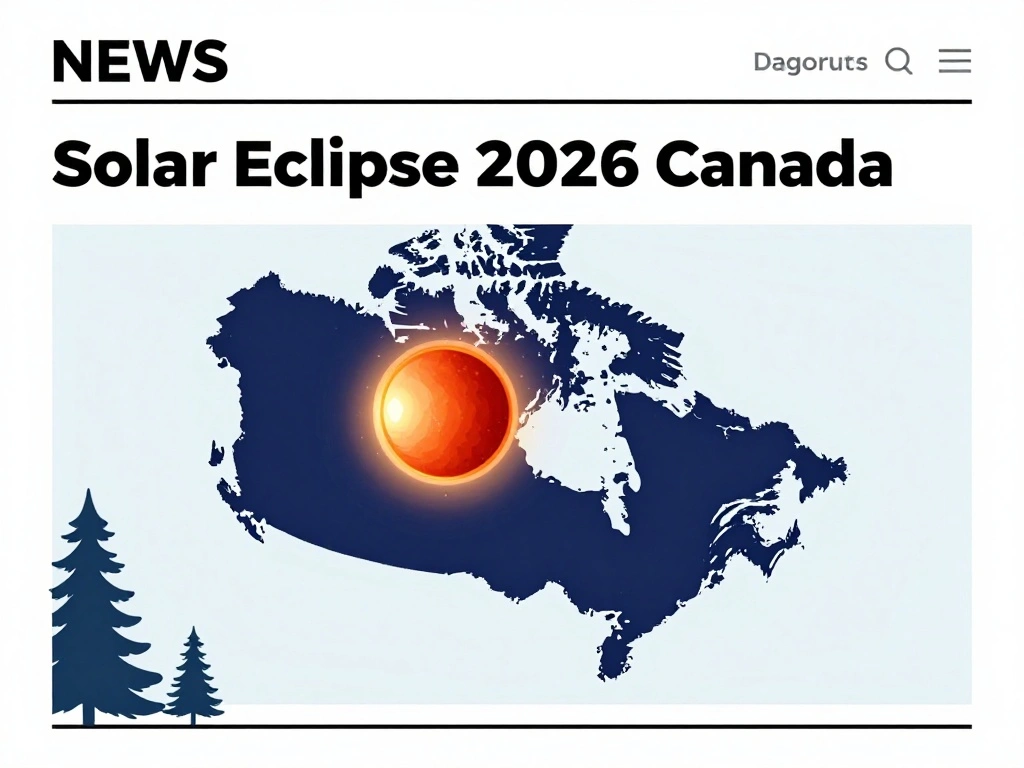
On August 12, 2026, skywatchers across Canada will witness a partial solar eclipse, with the maximum occultation reaching 65% in some regions. While the total phase—known as ‘The Grand Spanish Eclipse’—will sweep across mainland Europe, Canadians from Atlantic Canada to the Prairies will see a significant bite taken out of the Sun. In Atlantic Canada, including Nova Scotia, New Brunswick, Prince Edward Island, and Newfoundland and Labrador, the eclipse will be particularly pronounced. For instance, St. John’s, Newfoundland and Labrador, will see 53% coverage at 15:35 NDT, while observers in Calgary and Lethbridge will experience a more modest event. Even in central and northern Ontario, cities like Sudbury, North Bay, and Sault Ste. Marie will enjoy a noticeable partial eclipse, making it a must-see for astronomy enthusiasts across the country.nnOne of the most important things to understand about the August 12, 2026 solar eclipse is that North Americans will see the event fundamentally differently from observers in the path of totality in Europe. While Europeans will witness a dramatic total solar eclipse, Canadians will see a partial phase, with the Sun’s disk partially covered by the Moon. The degree of coverage will vary significantly by location: parts of Quebec and Maine will see a noticeable bite taken out of the Sun, while observers farther south and west will experience a more modest event. For example, in the Northeast US, New York City will see only 9% coverage, while Caribou/Presque Isle in Maine will see 29%. This variation highlights the importance of knowing your local viewing time and conditions to maximize your experience.nnThe eclipse is only half the story. One reason August 12, 2026, deserves special attention from North American skywatchers—apart from the solar eclipse—is what happens after sunset. The event is part of a larger celestial show, and those who still have their eclipse glasses will be able to watch a significant partial solar eclipse in the afternoon, followed by other astronomical phenomena. This makes it a perfect opportunity for both seasoned astronomers and casual observers to engage with the night sky. Remember to use proper eye protection, such as certified eclipse glasses, to safely view the Sun during the partial phases.nnFor Canadians, this

 Shimanta Das