Hasan Piker: The Twitch Star Shaking Up US Politics and Media
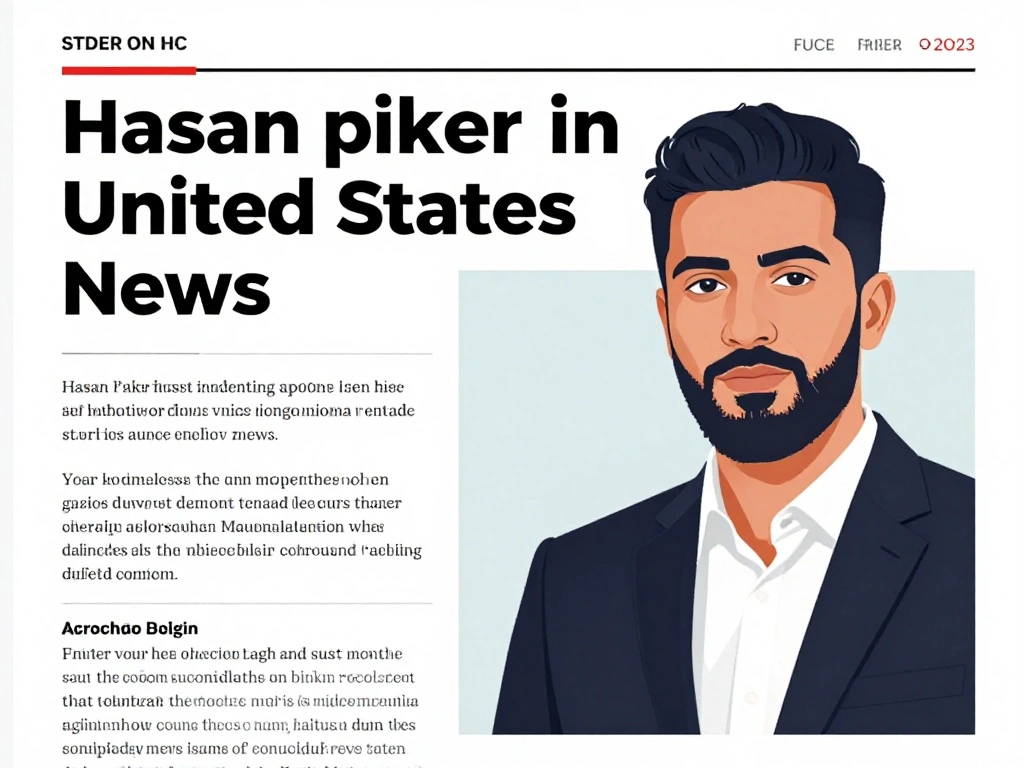
Hasan Piker, the Turkish-American Twitch streamer and political commentator, has become a prominent and polarizing figure in United States news. Born to a family with deep roots in Turkish academia and finance—his father, Mehmet Behçet Piker, is a political scientist and a founding member of Turkey’s conservative Future Party—Hasan took a different path. After graduating cum laude from Rutgers University in 2013 with a double major in political science and communication studies, he leveraged his education and charisma to build a massive online following, particularly among young progressives. His rise has not only made him a digital celebrity but also a lightning rod for debates about the future of the Democratic Party and the role of left-wing voices in American politics.
Piker’s political influence became especially evident during the 2020 Democratic primaries. His involvement in the Michigan primary, where he campaigned for progressive candidates, created divisions within the party, highlighting the tension between the establishment and the grassroots left. He also rallied in Philadelphia with state representative Chris Rabb during the primary for Pennsylvania’s 3rd congressional district, further cementing his role as a mobilizer for progressive causes. These efforts underscored a broader trend: digital influencers like Piker are reshaping how political campaigns engage with younger voters, often bypassing traditional media channels to speak directly to their audiences.
However, Piker’s prominence has also sparked fierce criticism. Veteran Democratic strategist James Carville has vowed to abandon the party if Piker becomes its leading voice, arguing that an ‘overwhelming majority’ of Democrats reject the democratic socialism that Piker espouses. This sentiment reflects a broader anxiety within the party about its ideological direction. Additionally, Piker’s views have been cited in critiques of the American educational system, with commentators pointing to his influence as evidence that schools are failing to instill critical thinking and civic values. For instance, a July 2026 opinion piece linked the recent primary win of a DSA candidate in Colorado to a broader failure in education, using Piker’s popularity as a symptom of this trend.
Despite the controversy, Piker’s impact is undeniable. He represents a new breed of political commentator who blends entertainment with activism, reaching millions who might otherwise tune out politics.

 Shimanta Das