Record Early Voting Surge: Over 31 Million Ballots Cast Nationwide Ahead of Midterms
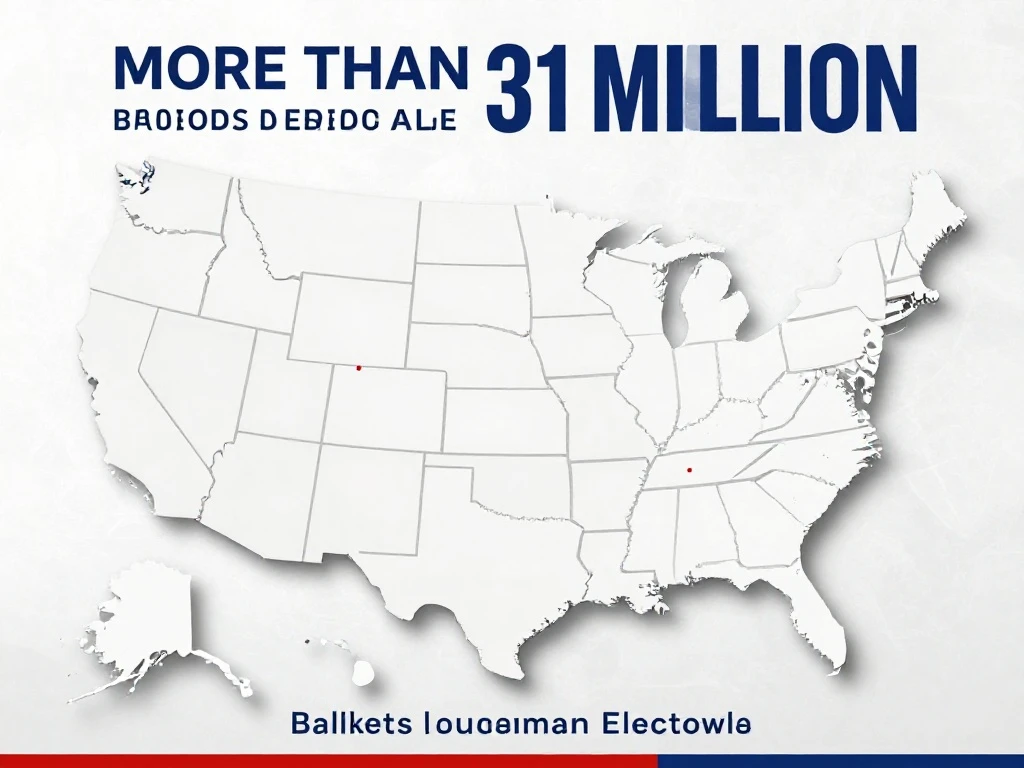
More than 31 million Americans have already cast their ballots for the upcoming midterm elections, according to new data, signaling a historic level of early voting engagement. As of the latest count, 33,306,918 mail-in and early in-person votes have been cast nationally, with key battleground states showing significant increases compared to the last midterm cycle. The surge is particularly pronounced in Senate battlegrounds, where both mail-in and early in-person voting are up substantially. For instance, Maine, North Carolina, and Ohio have each recorded increases of more than 30 percent in early in-person and mail voting. This wave of early participation underscores the intense voter interest in this election cycle.
However, experts caution against reading too much into early voting numbers. “It’s important not to overinterpret early voting data because it’s often a poor predictor of final results,” said Michael McDonald, a political science professor at the University of Florida who maintains the university’s Election Lab data on early voting. While the numbers are impressive, they may simply reflect a shift in when people vote rather than an overall increase in turnout. Still, the data provides valuable insights into who is voting and how. Twenty-five states report the party registration of early voters, including Florida, North Carolina, Arizona, Colorado, Pennsylvania, and others, offering a glimpse into the partisan makeup of the early electorate.
Beyond party affiliation, detailed demographic data on early voters—including age, gender, and race—is available in states that report it. This information helps campaigns and analysts understand which segments of the electorate are most engaged. The live data on ballots requested, returned, and cast in person ahead of the 2026 election is being tracked state by state, providing a real-time picture of voting patterns. As the nation hurtles toward Election Day, these early voting statistics will continue to be a key indicator of enthusiasm and potential outcomes, even as experts like McDonald remind us to wait for the final tally.

 Shimanta Das