Zelenskyy Condemns Trump’s Russian Diesel Deal as a Financial Lifeline for Putin
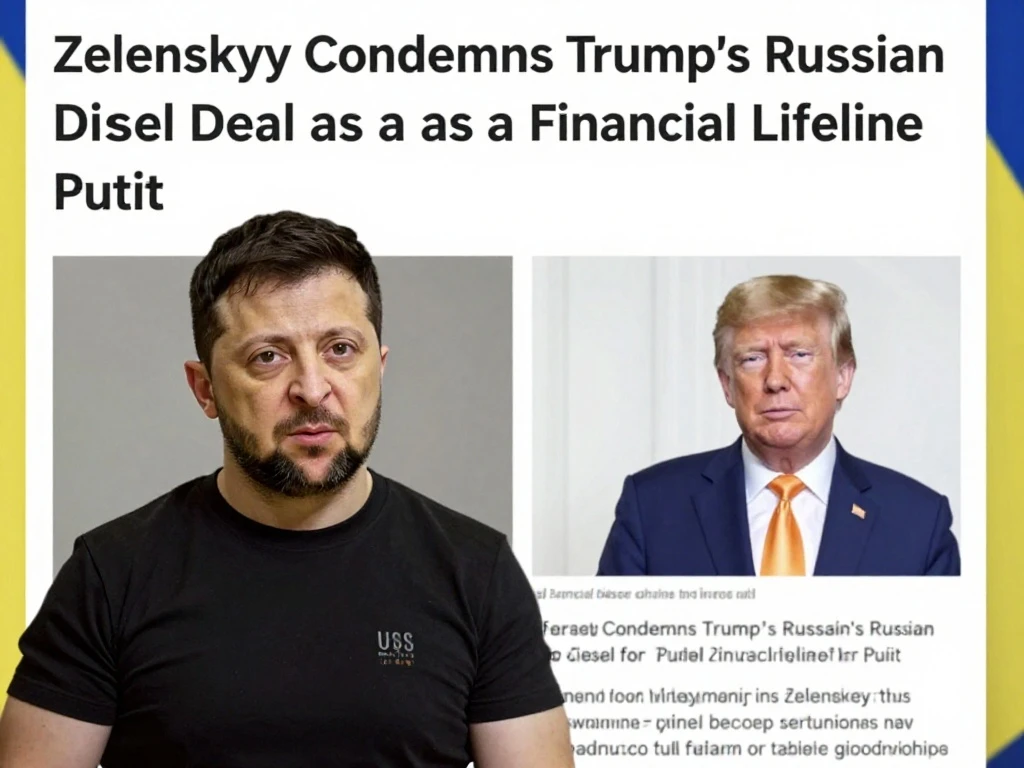
Ukrainian President Volodymyr Zelenskyy has sharply criticized former President Donald Trump’s recent agreement to purchase Russian diesel, calling it a “financial lifeline for Putin” that undermines Ukraine’s fight for survival. The deal, announced by Trump on his Truth Social network, is framed as a measure to reduce soaring U.S. fuel prices—prices that Trump attributes to his own decision to go to war with Iran. However, critics argue that the move rewards Russian aggression and betrays Ukraine, especially as the full-scale war enters its fourth year. The timing is particularly sensitive: Ukraine has seized important battlefield gains over Russia, which had led to key assistance from Trump, including a summer offer to grant Ukraine rights to co-produce Patriot missile interceptors—critical air defense munitions that have been depleted amid the conflict.
The diesel deal has also drawn bipartisan condemnation in the U.S. Senate. A statement co-signed by GOP Senators Lisa Murkowski of Alaska, Susan Collins of Maine, Thom Tillis of North Carolina, and John Curtis of Utah, alongside Democratic Senators Jeanne Shaheen of New Hampshire, Ron Wyden of Oregon, and Richard Blumenthal of Connecticut, warned that the agreement “rewards Putin and betrays Ukraine.” They argue that any truce or economic engagement with Moscow must be accompanied by clear terms and enforcement, which remain unclear. The senators’ concerns echo those of military experts like retired General Philip Breedlove, who accused Moscow of targeting Ukrainian civilians and critical infrastructure while describing Kyiv’s attacks on Russian energy facilities as a legitimate effort to disrupt the revenue sustaining Putin’s war machine.
Meanwhile, the practical impact of the diesel deal on U.S. fuel prices is questionable. The price of diesel fell to $3.75 a U.S. gallon on 9 October, down from its record high of $6, but that remains only a fraction of daily U.S. demand. Analysts have questioned whether the proposed supplies would significantly or sustainably reduce U.S. diesel prices, given the scale of consumption and uncertainty over deliveries. The deal also complicates the already fragile unity among NATO allies, who have been providing weapons to Ukraine through European purchases of American munitions under the Prioritized Ukraine

 Shimanta Das