Hurricane Threat Prompts Long Gas Station Lines and Empty Store Shelves Across the Gulf Coast
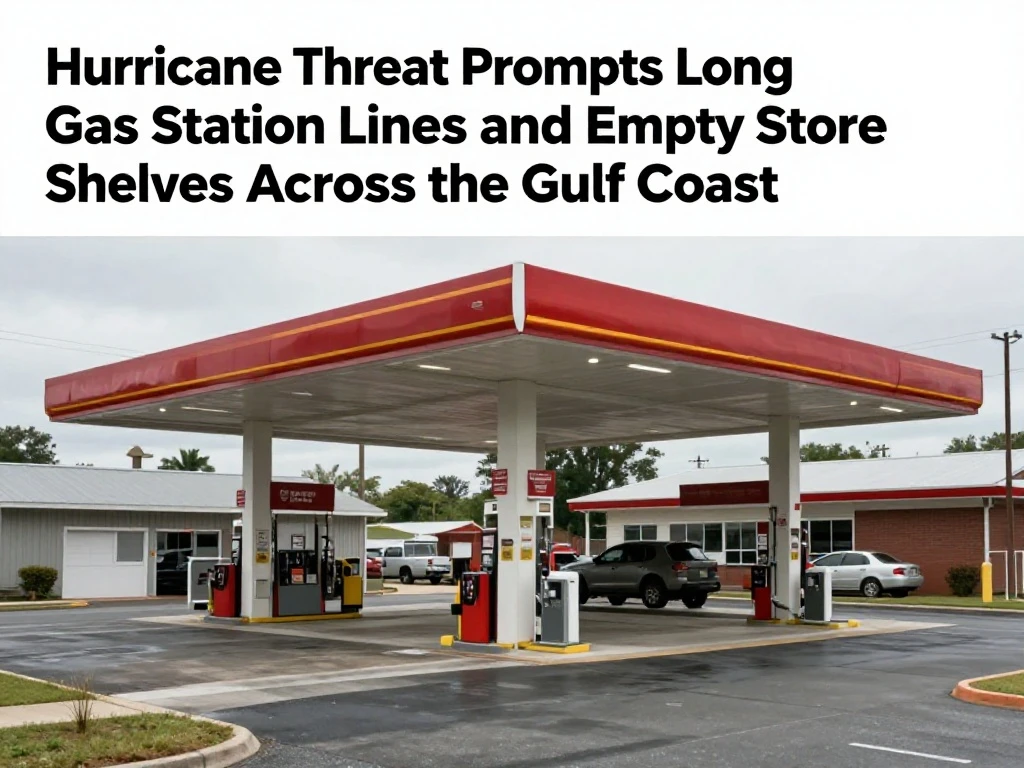
As a hurricane churns toward the Gulf Coast, residents are rushing to fill their tanks and stock up on essentials, leading to long lines at gas stations and empty store shelves. The storm’s projected path has raised concerns about potential disruptions to the region’s oil infrastructure, although experts caution that major impacts are unlikely. The Gulf of America region is home to a significant segment of the nation’s oil infrastructure, including oil rigs and platforms, but the majority of that infrastructure lies further west, toward western Louisiana and Texas. The storm is “making a swooping turn, almost just to the east of where the most significant infrastructure is,” said Bryan Domangue, the Gulf of America region director for the federal Marine Minerals Administration, which oversees offshore oil and natural gas production. “At this point, it’s swept just a little south of some of our major deepwater oil and gas facilities, and then it’s hugging the eastern boundary of where the infrastructure is.” Despite the storm’s proximity, oil experts are not anticipating major disruptions, but oil companies are taking precautions. Shell and BP have evacuated personnel from offshore facilities close to the storm’s path, mainly deepwater platforms. Shell is evacuating all personnel and shutting in production at Mars, Olympus, Ursa, Vito and Appomattox, having already moved non-essential staff from Stones. These actions reflect the industry’s standard safety protocols. According to the Marine Minerals Administration, 16% of the 371 manned platforms, plus additional rigs, have been affected. The concentration of production in a handful of deepwater hubs means that even a near-miss can have outsized effects, highlighting the wider energy infrastructure vulnerabilities that arise when supply depends on a small number of critical facilities. Six plants stand out as key nodes in this network, and their status is being closely monitored.nnDespite the precautionary measures, the storm has not yet caused significant market ripples. No futures price moves in crude, gasoline, diesel or natural gas have been attributed to Isaias by major wire services, and no named bank or consultancy has published outage-duration or price forecasts. This suggests that the market views the threat as manageable

 Shimanta Das