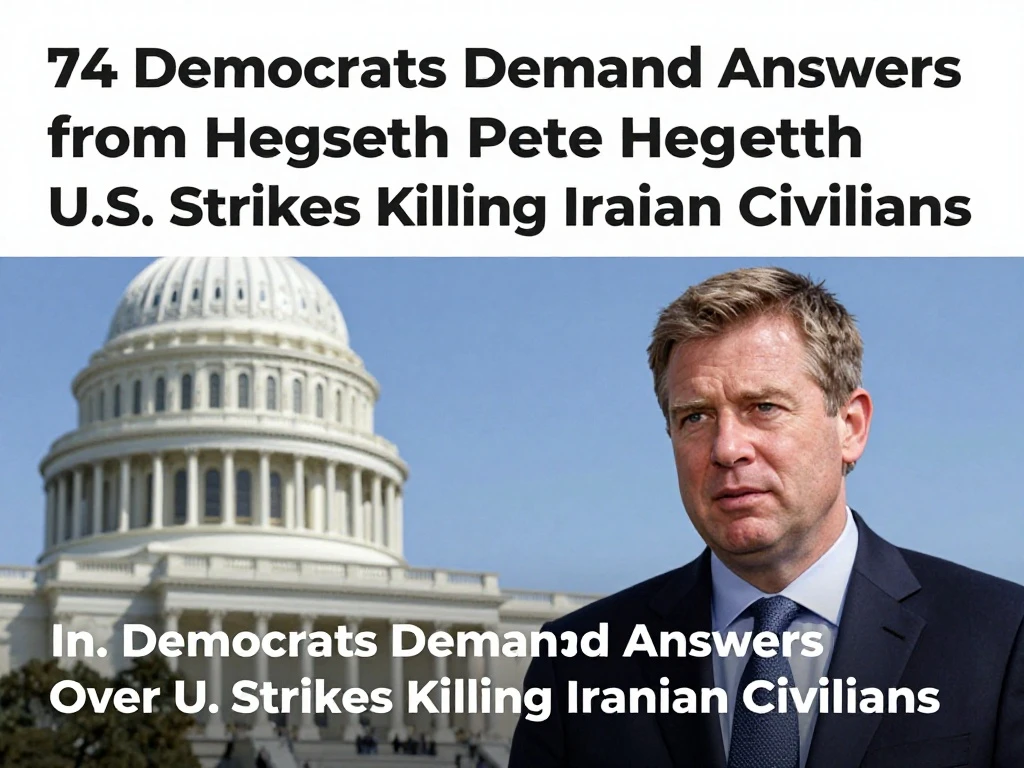
74 Democrats Demand Answers from Hegseth Over U.S. Strikes Killing Iranian Civilians
In a sharp escalation of congressional oversight, 74 Democrats have demanded answers from Defense Secretary Pete Hegseth regarding U.S. military strikes that killed Iranian civilians. Led by Senator Elizabeth Warren and Representative Pat Ryan, the lawmakers sent a letter on Wednesday posing 23 questions to Hegseth, with a response deadline of 12 August. The letter focuses on a 1 March drone strike on a U.S. logistics hub at the port of Shuaiba, south of Kuwait City, which left wounded U.S. soldiers without adequate hospital care for more than a week—just days into the U.S.-Israel war on Iran. Democrats also question why the Pentagon’s public casualty count for the war briefly changed, signaling that civilian casualty oversight will remain a central demand regardless of what the Pentagon says next.
The Democrats’ letter comes amid converging pressures: an inspector general’s findings, UN-backed war crimes allegations, and blocked base visits. They listed specific alleged war crimes by the Trump administration, including the bombing of a girls’ school in Minab, a missile strike on an elementary school and sports hall in Lamerd, an airstrike on a “major highway bridge” that failed to provide any military advantage, and the use of scatterable antitank landmines that landed indiscriminately in civilian areas. “At the same time, prices across the country have gone up significantly, placing the burden of this conflict on American families,” the lawmakers wrote, linking the war’s costs to domestic economic pain.
On Wednesday, Hegseth appeared before the House Armed Services Committee for his first public questioning since President Trump launched the war more than two months ago. Democrats view the hearing as their best chance yet to hold the administration accountable for what they call an “undefined” and “unauthorized” war. Hegseth remained defiant, stating, “I’ll continue to remain an unapologetic supporter of efforts to confront the Iranian regime and its proxies.” He also defended his cost estimate, which included payroll, operation, maintenance, and other anticipated expenses through the end of the budget year.
With the inspector

 Shimanta Das