{
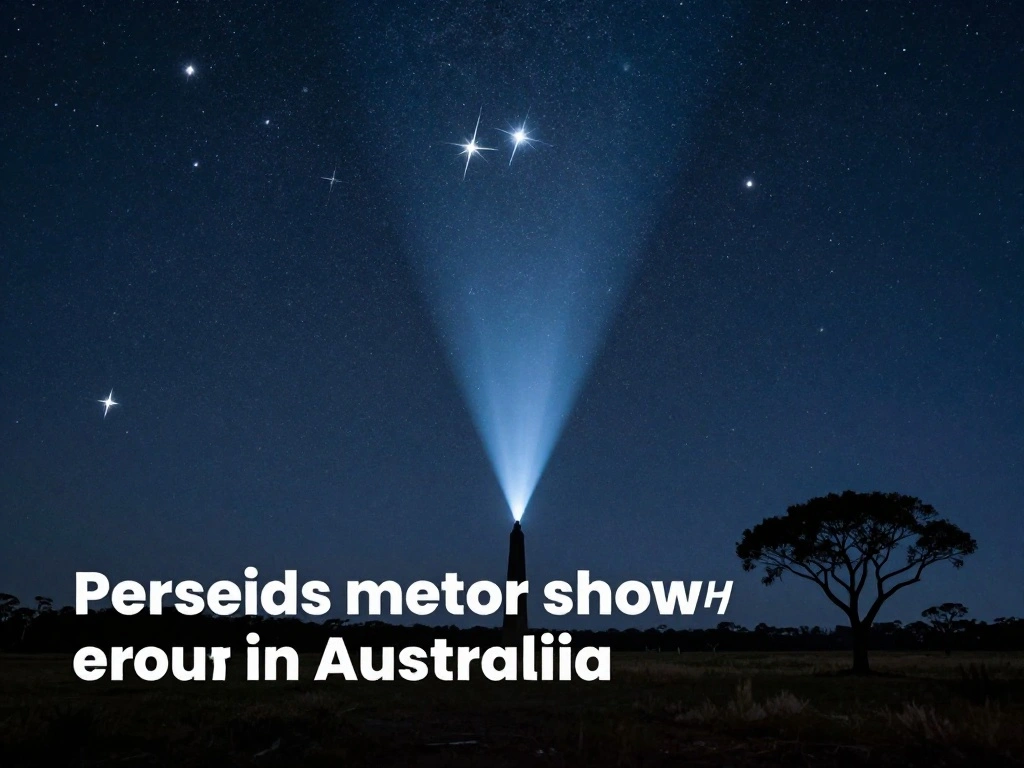
“title”: “Perseids 2026: Australia’s Frustrating View of the ‘Best Meteor Shower of the Year'”,
“content”: “
Every year, skywatchers around the world eagerly anticipate the Perseid meteor shower, which NASA has dubbed “the best meteor shower of the year.” This celestial spectacle occurs when Earth passes through the debris trail of comet 109P/Swift-Tuttle, creating a dazzling display of shooting stars. In 2026, the Perseids are set to peak on Wednesday night, offering a spectacular show for those in the Northern Hemisphere. However, for observers in Australia and New Zealand, the excitement is often tempered by a frustrating reality: the Perseids are largely invisible from the Southern Hemisphere.
The root of this frustration lies in the radiant point of the Perseids, which is located in the constellation Perseus, far north in the sky. For most of Australia, this radiant never rises high enough to be seen, and even in the far north of the country, it remains low on the horizon at its highest point. As a result, Australian skywatchers are treated to only a handful of meteors, if any, during the peak. This is a stark contrast to the Southern Hemisphere’s own meteor shower, the Eta Aquariids, which occur in early May and are a spectacular display courtesy of Halley’s Comet, with high meteor counts per hour. For Australians, the Eta Aquariids are often the preferred celestial event, offering a more rewarding viewing experience.
Despite the Perseids’ poor visibility, there is still a glimmer of hope for Australian enthusiasts. In 2026, the peak night will also feature a deep partial solar eclipse, visible in the UK in the early evening, but not in Australia. However, for those willing to travel to the far northern reaches of the continent, such as Cape York, there is a slim chance to catch a few Perseids low on the northern horizon. Yet, even then, the experience is far from ideal. For the majority, the best advice is to mark the calendar for the Eta Aquariids in May, which offer a far more impressive display for Southern Hemisphere observers.
In conclusion, while the Perseids are a magnificent event for the Northern Hemisphere, Australians are left out of the
 Shimanta Das