US Monitors Suspected Pneumonic Plague Death in Siberia as WHO Investigates
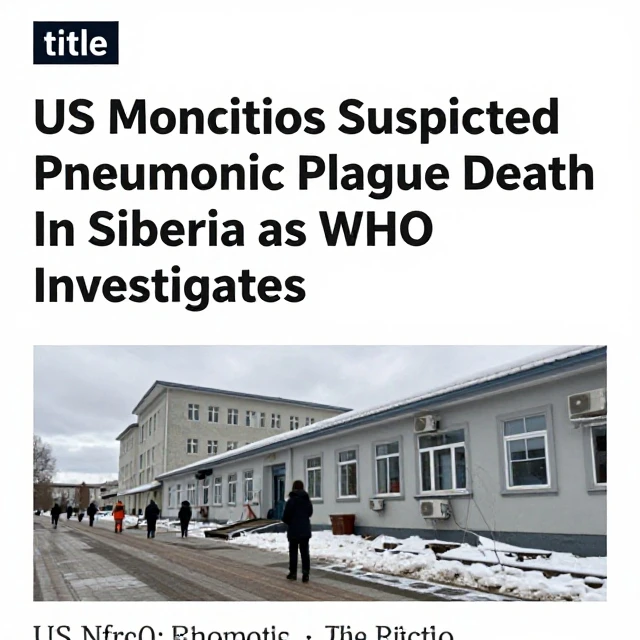
The death of a 28-year-old laboratory worker in Siberia has triggered international concern over a possible case of pneumonic plague. Daria Shipilova, an employee at a plague research institute in Irkutsk, about 2,600 miles east of Moscow, died under circumstances that Russian media reports suggest may be linked to the deadly disease. According to unconfirmed reports, hospitals in the region were quarantined and dozens of people placed under observation following her death. While Russian authorities have not officially confirmed these measures, the incident has drawn scrutiny from global health agencies.
On Tuesday, the World Health Organization (WHO) said it is closely following the situation. WHO spokesperson Christian Lindmeier told reporters in Geneva that “a woman who worked at the laboratory in Irkutsk oblast has died, and the authorities are looking into whether pneumonic plague caused her death.” He noted that her workplace was “an institute that studies dangerous pathogens, including plague, in a part of Siberia where plague occurs naturally in wild animals.” This context raises the possibility of occupational exposure, though the exact cause remains under investigation.
In Washington, Secretary of State Marco Rubio said the United States is monitoring the reports “closely.” The State Department is urging Moscow to share accurate information quickly as details remain unconfirmed. “The safety and security of U.S. citizens remains the department’s top priority,” a spokesperson said, encouraging Americans traveling overseas to enroll in the Smart Traveler Enrollment Program (STEP) to receive updates. The heightened alert reflects concerns that a potential outbreak could spread if not contained swiftly.
Kremlin spokesman Dmitry Peskov appeared to downplay U.S. President Donald Trump’s suggestion that the issue was a “major problem for Russia.” “To be honest, I did not hear the president’s words that he considers this a major problem for Russia,” Peskov told a journalist. As testing and monitoring continue, health officials worldwide are watching for any signs of wider transmission. Pneumonic plague, if left untreated, can be fatal, but early antibiotic treatment is effective. The WHO and U.S. authorities

 Shimanta Das