US Measles Cases Surpass 4,000, Highest Level Since 1991
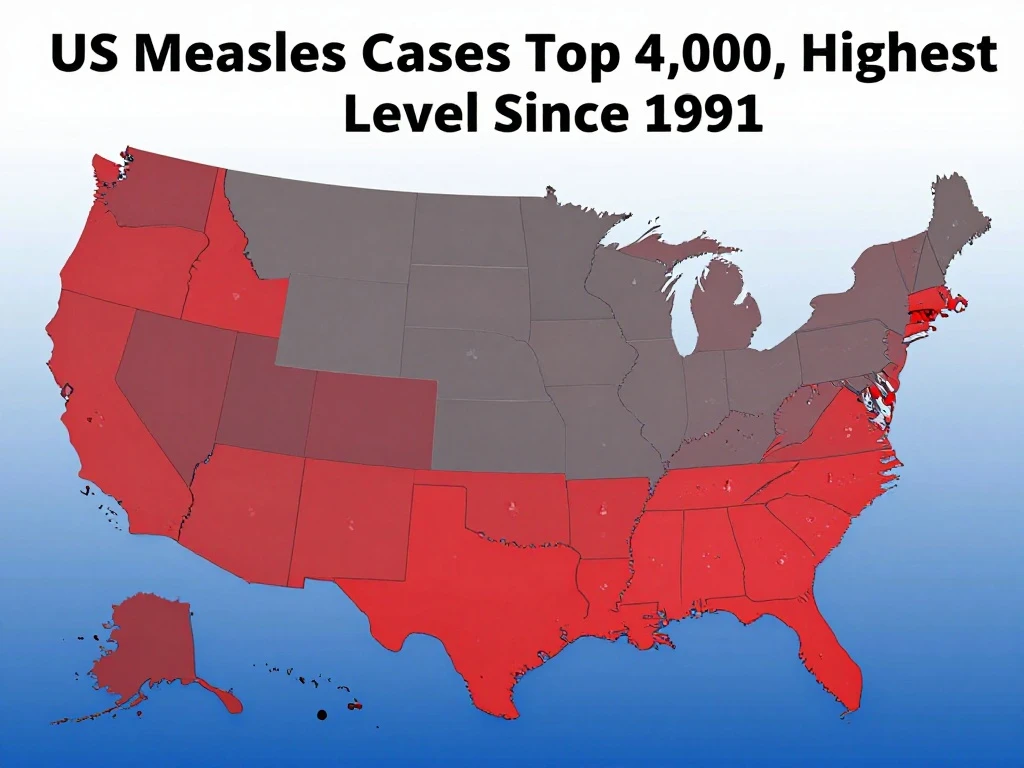
The United States has recorded more than 4,000 measles cases in 2026, the highest annual total since 1991, according to the Centers for Disease Control and Prevention. The surge is driven by outbreaks in undervaccinated communities, with Lancaster County, Pennsylvania, remaining the epicenter at 415 cases, followed by Mifflin County at 167, per CIDRAP’s analysis of state data. Other states with significant activity include Wisconsin (263 cases), Ohio (231), Kentucky (104), and New York (102).
Unvaccinated individuals account for 95% of confirmed cases, underscoring the role of vaccine hesitancy in fueling the crisis. The CDC reports that the majority of cases are among children and teenagers aged 19 and younger. In Philadelphia, health officials warned of a possible exposure at Children’s Hospital of Philadelphia (CHOP) main building on Civic Center Boulevard, including the main cafeteria, between 9:30 a.m. and specified times. Officials are working with CHOP and the state to provide potentially exposed infants with a preventative antibody product to prevent measles or lessen its severity.
While the outbreak continues to grow, CIDRAP noted that no new outbreaks were identified in the most recent week, suggesting that recent increases are coming mainly from clusters that were already active. This indicates that containment efforts may be having some effect, but the situation remains serious. Nurses and other healthcare professionals remain among the most trusted voices in health care, and their role in promoting vaccination and addressing concerns is critical to stopping the spread.
The 2026 outbreak is a stark reminder of the importance of maintaining high vaccination coverage. Measles is highly contagious and can lead to severe complications, especially in young children. Health officials urge parents to ensure their children are up to date on the MMR vaccine and to heed public health advisories. With cases at a 35-year high, swift action is needed to prevent further spread and protect vulnerable populations.
 Shimanta Das