US Embassies in Middle East Cut Staff as Iran Threats Escalate
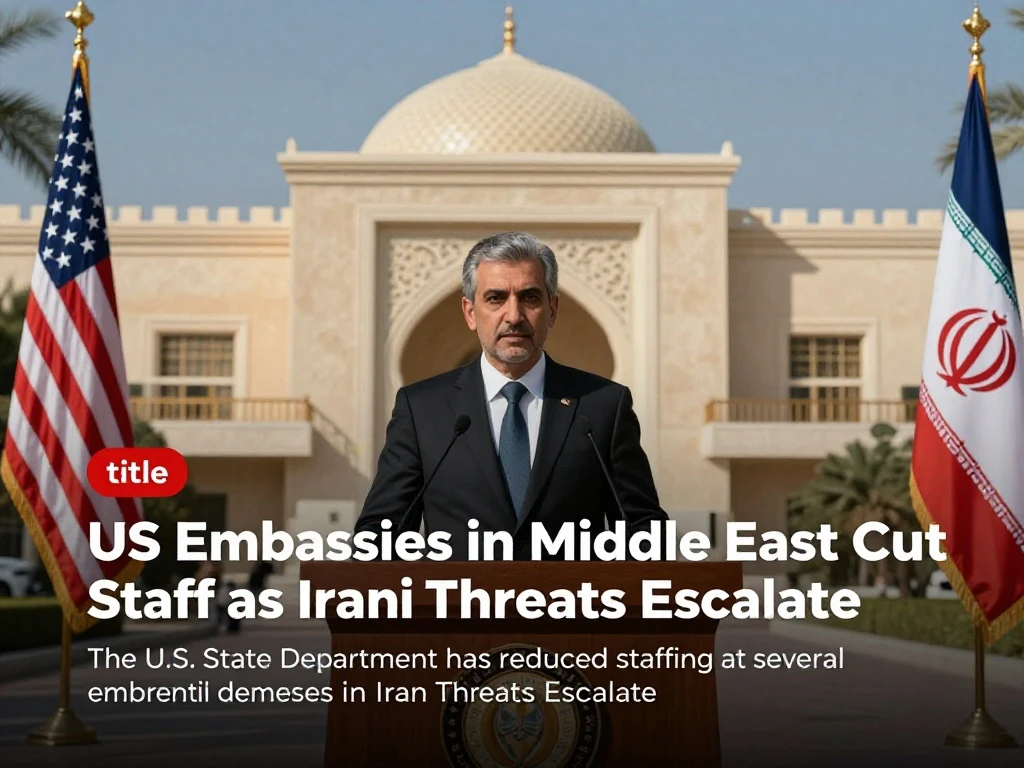
The U.S. State Department has reduced staffing at several embassies across the Middle East in response to heightened threats from Iran and its proxies, though officials emphasize that the diplomatic missions remain open. A department spokesperson stated, “The safety and security of our personnel and their families remains the Department’s top priority as we continue to assess conditions across the region.” The move comes amid escalating tensions, including increased hostilities from Iranian-supported Houthis against Saudi Arabia, which have targeted civilian airports and critical infrastructure, causing civilian casualties and severe travel disruptions. The decision to cut staff underscores the growing security concerns for American diplomats in the region.nnThe reduction in personnel is not without personal cost. Those forced to leave the region departed with almost all of their belongings and left behind support networks of friends that are often critical to an overseas posting. The State Department spokesperson said the department remains “committed to supporting our workforce and their families throughout this process and will provide updates through appropriate channels as decisions are made.” Despite the drawdown, the embassies will remain open, and it remains under ordered departure, meaning nonessential staff and family members are authorized to leave. This approach aims to balance security with the need to maintain a diplomatic presence.nnHowever, the staffing cuts raise concerns about the effectiveness of U.S. diplomacy in the region. “The fewer diplomats you have in country, the fewer people you have who are focused on what is happening in that country, in that government, keeping tabs on key issues for the United States,” explained one expert. The reduced presence could hamper the ability to monitor developments and engage with local governments, potentially weakening U.S. influence at a critical time. The threats extend beyond Saudi Arabia, with risks to U.S. military bases in the region if the United States continues to help guide commercial ships through the Strait of Hormuz, a vital waterway for global energy trade.nnThe State Department’s decision reflects a careful calibration of risk management and diplomatic necessity. While the embassies remain open, the reduced staffing signals the seriousness of the security environment. The spokesperson’s assurance of support for affected personnel highlights the human dimension of these decisions. As conditions evolve, the department will continue to assess and adjust its posture, prioritizing safety while striving

 Shimanta Das