Trump’s Russia-Ukraine Energy Ceasefire: A Promising Step Marred by Continued Strikes
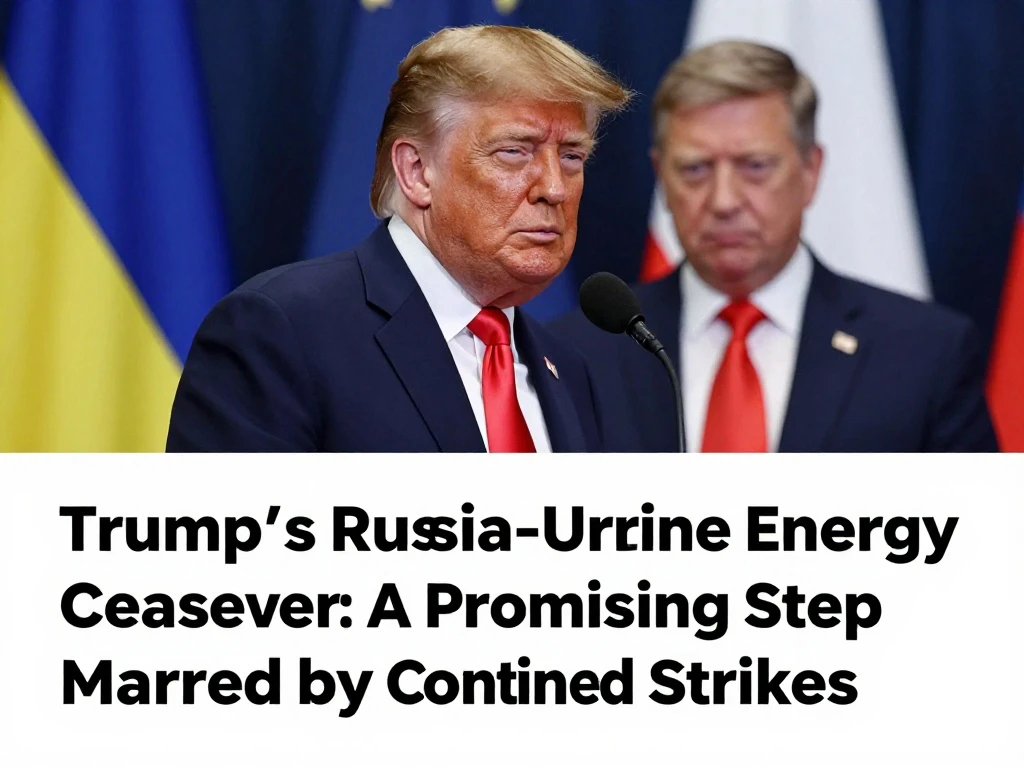
President Donald Trump announced a breakthrough energy ceasefire between Russia and Ukraine, aimed at halting attacks on critical energy infrastructure. However, the optimism was quickly tempered as Ukrainian President Volodymyr Zelenskyy reported that Russia had struck numerous energy facilities, including a power plant in Kharkiv, a gas production facility, and a civilian gas station. Zelenskyy expressed that Ukraine was “horribly surprised” by the strikes, which occurred shortly after Trump’s “sudden but very important post.” Despite this, Zelenskyy maintained that “this energy ceasefire can work, and it can become a major step toward ending the war.” The incident underscores the fragility of diplomatic efforts and the challenges of enforcing agreements in an active conflict zone.nnThe broader context of the war reveals a complex geopolitical landscape. With the full-scale war now in its fourth year, Ukraine has seized important battlefield gains over Russia, which led to key assistance from Trump. This includes the president’s offer over the summer to grant Ukraine rights to co-produce Patriot missile interceptors — key air defense munitions that have been depleted amid the U.S.-supplied weapons to Ukraine provided through European purchases of American munitions under the Prioritized Ukraine Requirements List (PURL). Meanwhile, Russia and Ukraine remain locked in a long-range aerial war while their armies are largely deadlocked on the front line, more than 4 1/2 years since Moscow’s full-scale invasion. The energy ceasefire, if successful, could pave the way for broader peace negotiations, but continued strikes threaten to derail progress.nnInternational reactions have been mixed, with some U.S. lawmakers criticizing a U.S.-Russian deal on diesel supplies, saying it undermined efforts to ensure stability in Europe and to end the war in Ukraine. Senators like Susan Collins of Maine, Lisa Murkowski of Alaska, Thom Tillis of North Carolina, and John Curtis of Utah, along with Democrat Senators, have voiced concerns. Additionally, the conflict has spilled into cyberspace: a day after Ukrainian drones hit a major data center in the Kaluga region, southwest of Moscow, partly putting it out of action, Yandex said. These developments highlight the multifaceted nature of the war, where energy, technology, and diplomacy are intertwined.nnAs the war enters its fifth year, the energy ceasefire represents

 Shimanta Das