Tornadoes and Flash Flooding Threaten Millions Across Multiple U.S. States
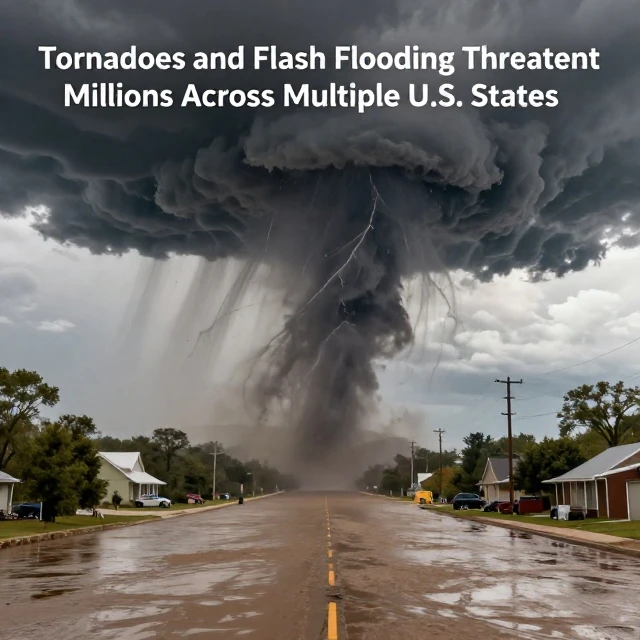
Millions of Americans are on high alert as a dangerous storm system threatens to unleash tornadoes, flash flooding, and severe thunderstorms across multiple states. The National Weather Service (NWS) warns of winds exceeding 70 miles per hour, possible tornadoes, and large hail, with the potential for supercells capable of producing isolated but significant tornadoes. A rogue supercell or two is also possible ahead of the main line, adding to the unpredictability of this event. This threat comes during an already active storm season that has resulted in widespread power outages, property destruction, and significant disruptions in multiple states.
The current system is being fueled by a large warm sector over the Great Lakes region, a powerful jet streak of 100 knots (120 mph; 190 km/h), and an intense cold front. These conditions are expected to contribute to significant tornadoes, strong wind, and large hail. Three days before the event, on the morning of March 31, an enhanced (3/5) risk was outlined over an area overlapping the previous 30% zone, now including small parts of Oklahoma, Iowa, and Alabama, while covering the majority of Kentucky, Illinois, Arkansas, and Indiana. Residents across these threatened regions are urged to remain alert throughout the weekend and into early next week, monitoring official forecasts and acting promptly on warnings issued.
The human toll from recent severe weather has been devastating. According to reports, there have been 24 total fatalities (8 tornadic, including one indirect, and 15 non-tornadic) and over 47 injuries. An indirect fatality occurred after an EF2 tornado struck Advance and Delta in Missouri, leaving significant damage to homes. Multiple major rivers have overflowed their banks, causing widespread damage in neighboring towns, with some nearing record crest levels. In Frenchville, Maine, 6 mm of rain was recorded, contributing to localized flooding. Damage estimates are still being compiled, but the impact is already substantial.
As the storm system continues to evolve, it is crucial for residents in the affected areas to stay informed and prepared. Keep a close eye on local weather alerts, have a safety plan in place, and be ready to seek shelter immediately if a warning is issued.

 Shimanta Das