Toledo Chemical Tank Leak Forces Evacuation of 300, Shelter-in-Place for Thousands
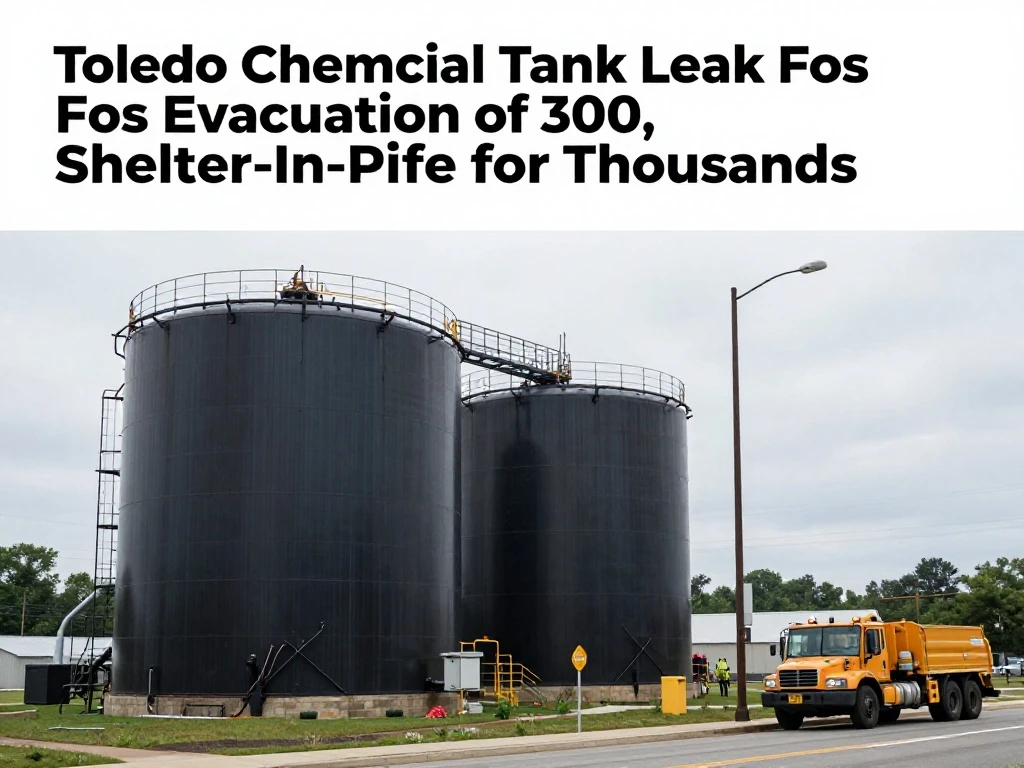
A chemical tank leak in Toledo, Ohio, prompted evacuation orders for nearly 300 people and a shelter-in-place advisory for over 50,000 residents after a 5,500-gallon tank ruptured Tuesday night, releasing toxic glycidyl methacrylate gas into the air. The incident began when an employee at MC Tank Terminal, a company specializing in bulk liquid chemical transportation and storage, called first responders late Tuesday to report the explosion. By Wednesday, a reduced evacuation order remained in place as authorities continued to monitor the situation.nnAccording to Toledo Mayor Wade Kapszukiewicz, the leak resulted from a transfer error. During a news conference on Wednesday, the mayor explained that authorities were allowing the chemical to vent naturally from the tanker rather than attempting to actively stop the leak, which could risk an explosion. Residents under the shelter-in-place order were instructed to remain indoors, close all windows and doors, and turn off all ventilation systems that bring in outside air, according to the city. The order affected a wide area, underscoring the potential severity of the incident.nnAs the community grappled with the immediate dangers, concerns turned to the lingering effects of the chemical release. One resident voiced her worries: “My main concern is how did that affect everything overnight when it was raining down on cars, houses, my garden,” she said. The leak occurred during rainy conditions, which may have spread the chemical further, heightening fears about contamination of property and the environment. Glycidyl methacrylate is a flammable and toxic liquid used in the production of various polymers and resins, and exposure can cause irritation to the skin, eyes, and respiratory system.nnThe incident highlights the risks associated with industrial chemical storage and transport, particularly in residential areas. MC Tank Terminal, the company involved, provides tank container transportation, storage, and maintenance services. As investigations continue, officials are likely to examine safety protocols and emergency response procedures. For now, residents are left to assess the impact on their homes and health while authorities work to ensure the area is safe. The reduced evacuation order suggests progress, but the full extent of the environmental and health consequences remains to be seen. This event serves as a reminder of the importance of stringent safety measures in handling hazardous materials to prevent such accidents

 Shimanta Das