
The Mark Carney–Howard Lutnick Trade Dispute: A Clash of Economic Visions in Canada
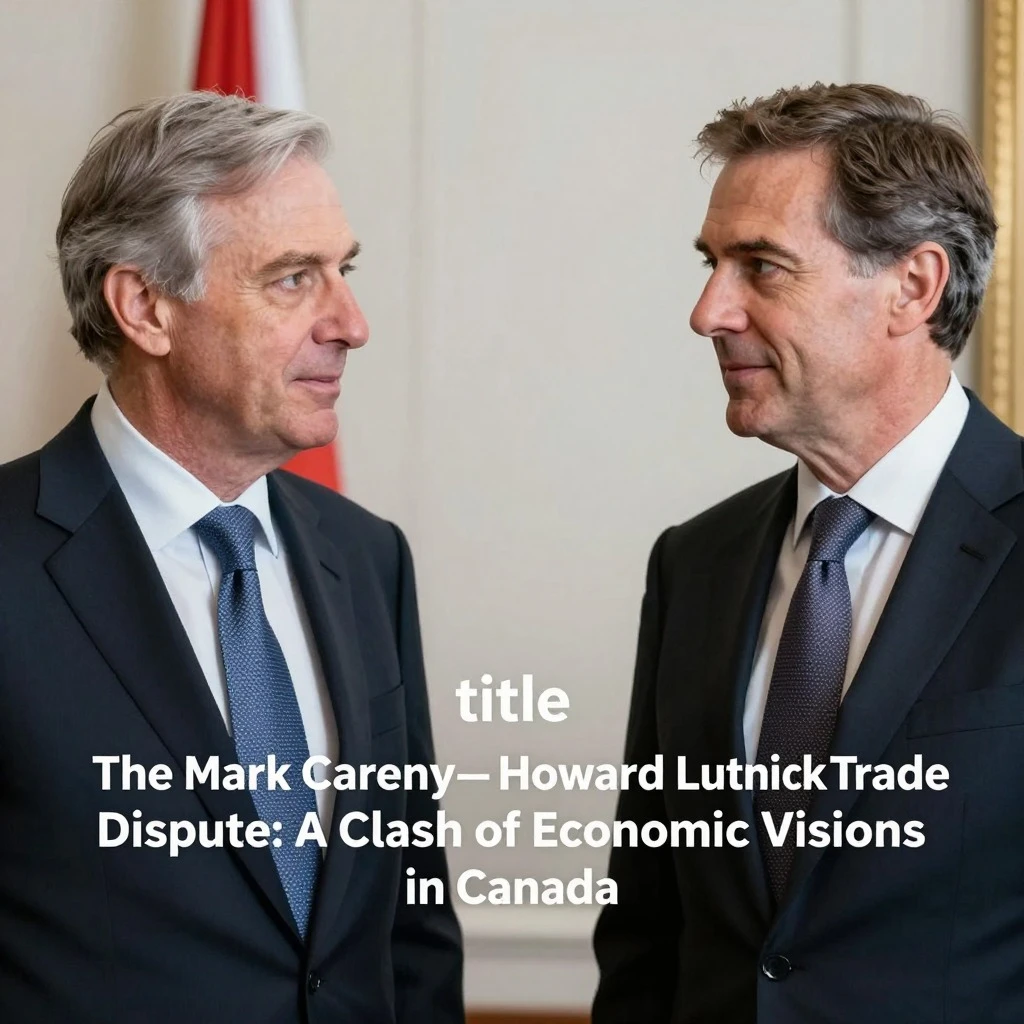
The recent trade dispute between Mark Carney and Howard Lutnick has captured significant attention in Canada’s economic and political spheres. Mark Carney, former Governor of the Bank of Canada and the Bank of England, is a prominent figure known for his advocacy of sustainable finance and global cooperation. Howard Lutnick, CEO of Cantor Fitzgerald, is a vocal proponent of free-market capitalism and has been a key ally of former U.S. President Donald Trump. Their conflict centers on divergent approaches to trade policy, particularly regarding tariffs and international agreements, and has implications for Canada’s economic strategy.
At the heart of the dispute is a fundamental disagreement over the role of government in trade. Carney has emphasized the need for strategic state intervention to protect domestic industries and ensure that trade benefits are distributed equitably. He argues that unregulated free trade can lead to job losses and increased inequality, and he supports measures like carbon border adjustments to align trade with climate goals. In contrast, Lutnick champions unfettered free trade, asserting that tariffs and regulations hinder economic growth and innovation. He has criticized Carney’s stance as protectionist and detrimental to North American competitiveness, especially in the context of the USMCA (United States-Mexico-Canada Agreement).
The dispute has broader implications for Canada’s trade relations, particularly with its largest partner, the United States. Lutnick’s influence in U.S. political circles could shape American trade policy in ways that challenge Canadian interests. For instance, his advocacy for aggressive tariff measures on Canadian goods, such as lumber and dairy, has already created friction. Carney, on the other hand, has called for a more collaborative approach, urging both nations to resolve differences through dialogue and to focus on shared goals like supply chain resilience and clean energy transition. This clash of visions is not just about policy but also about the future direction of Canada’s economy in a rapidly changing global landscape.
As the dispute unfolds, Canadian policymakers and business leaders are closely watching. The outcome could influence Canada’s trade diversification efforts, its stance on digital trade and data sovereignty, and its ability to balance economic growth with environmental sustainability. While Carney’s perspective resonates with those who prioritize social and environmental safeguards, Lutnick’s approach

 Shimanta Das