Summer Koshien 2025: Tradition, Heat Management, and the Future of Japanese High School Baseball
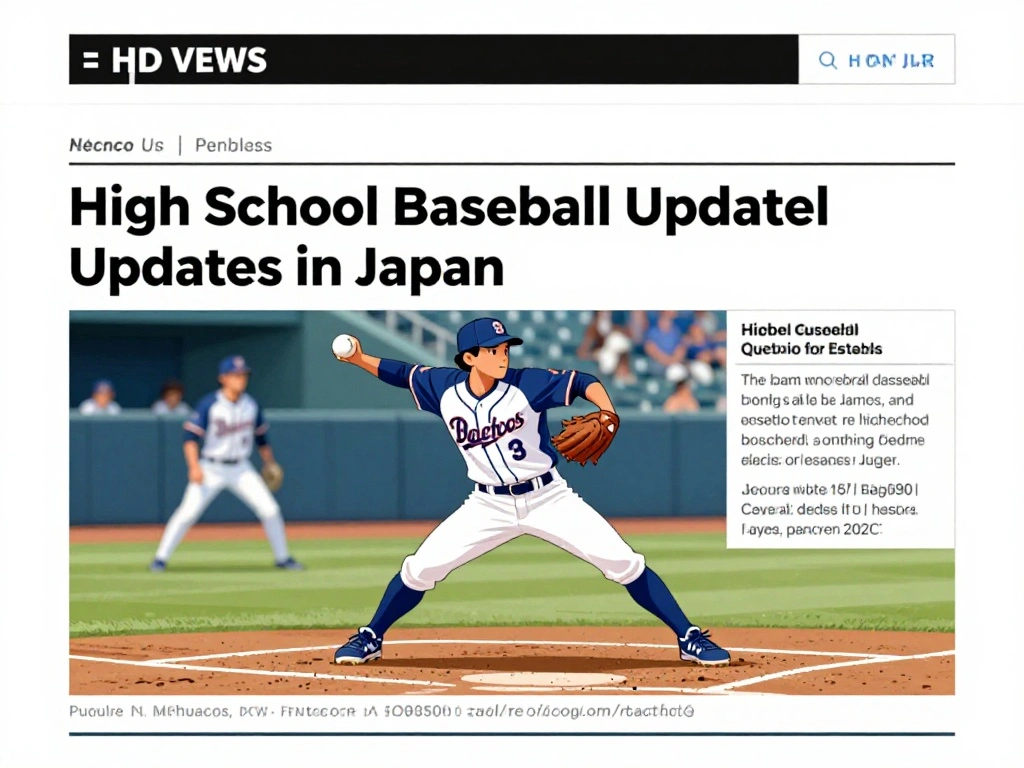
As the Japanese summer intensifies, so does the fervor surrounding the nation’s most prestigious high school baseball tournament—Summer Koshien. Governed by strict amateur regulations, the tournament emphasizes team discipline and the ‘spirit of the game,’ a cornerstone of Japanese sports culture. For players, reaching Koshien is a dream, and the competition is viewed as a proving ground for future Nippon Professional Baseball (NPB) stars. The prestige is such that schools hold pep rallies, and local communities provide substantial logistical and financial support, underscoring the tournament’s deep societal impact.
However, the 2025 edition has brought significant changes and challenges. With the tournament played during the peak of summer, heat management has become a primary focus. Organizers have introduced ‘cooling breaks’ and adjusted schedules to avoid the midday sun, including a two-session daily format (morning and evening games) in 2025. Despite these measures, the fundamental risk to players remains, as highlighted by a survey of member schools: while 20% support the changes, 0% of women across all age groups favored the change, with the primary reason for support being heat stroke prevention. This disparity underscores the ongoing debate about balancing tradition with player safety.
The tournament’s intensity is matched by its operational challenges. In a notable incident, Hori, a school official, cited significant disruption to the tournament’s operation caused by defamatory social media posts, as well as damage to the ‘honor and trust of high school baseball,’ leading to a withdrawal. This incident reflects the growing impact of digital platforms on amateur sports and the need for robust governance.
Looking ahead, the tournament also highlights the evolution of coaching in Japan. Over a student’s high school career, they have a maximum of five chances to play at Koshien: first year (summer only), second year (spring and summer), and third year (spring and summer, retiring after the summer tournament). With the third-years now retired, the remaining players have already started their preparations, embodying the relentless cycle of dedication and renewal that defines Japanese high school baseball. As television audiences rival major professional sporting events, Summer Koshien remains a testament to the enduring spirit of amateur athletics, balancing tradition with necessary innovation.
 Shimanta Das