Southwest Airlines Grounded: Massive IT Outage Triggers Nationwide Chaos and Exposes Critical Vulnerabilities
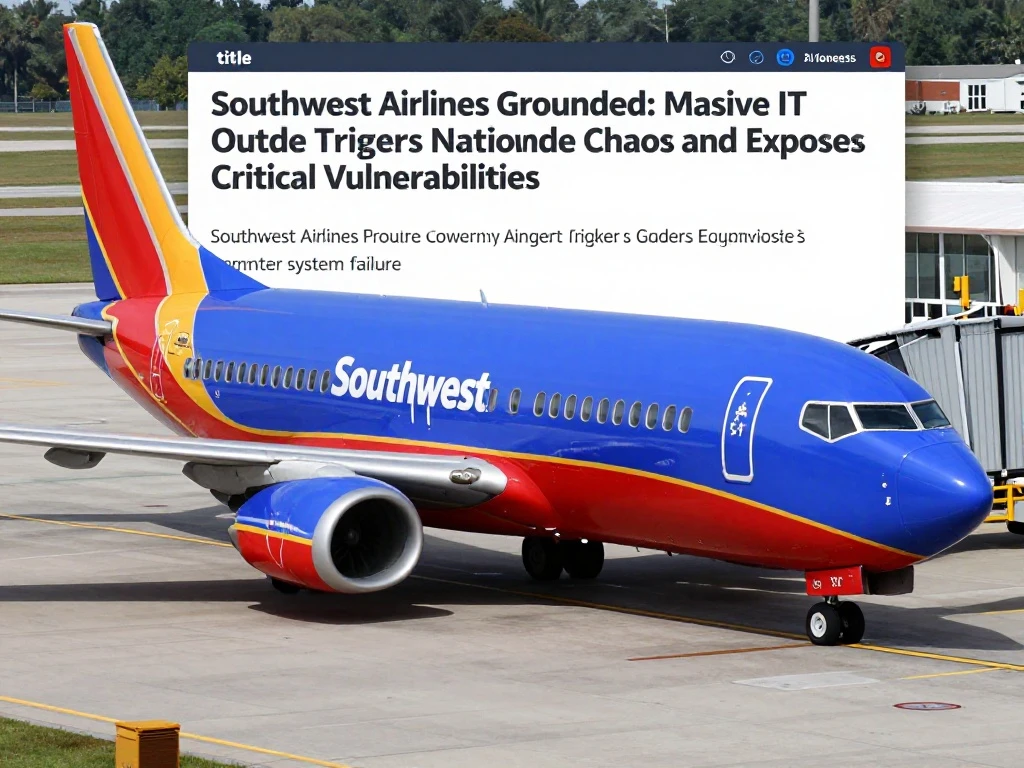
Southwest Airlines faced a crippling computer system failure on Friday that forced the temporary grounding of its entire fleet, leaving thousands of passengers stranded and raising serious questions about the resilience of airline IT infrastructure. The widespread outage knocked out the “IT backbone” for several major airlines, but Southwest was hit particularly hard, with operations at key hubs like Dallas Love Field (DAL) grinding to a halt. Passengers reported difficulties printing boarding passes and scanning mobile credentials, leading to long lines and widespread frustration. A Southwest spokesperson emphasized, “Nothing is more important to Southwest than the Safety of our Customers and Employees,” underscoring the airline’s commitment to safety amid the chaos.nnThe disruption was especially severe at airports where Southwest handles a substantial share of passenger traffic, such as Dallas Love Field. Without reliable access to passenger information and standard departure procedures, aircraft remained on the ground even when otherwise ready to depart. The airline quickly identified Amadeus, a major travel technology provider, as the source of the interruption affecting its passenger-processing operations. This third-party dependency highlights a growing concern in the aviation industry: the reliance on external vendors for critical systems. As flights were delayed and cancellations mounted, passengers took to social media to share images of overcrowded terminals and express their frustration over the lack of timely information.nnHowever, this incident may be a precursor to an even more alarming event. According to reports, on October 6, 2026, Southwest Airlines experienced an unprecedented system failure that grounded its entire fleet nationwide—over 1,400 flights—due to an outage at a third-party weather data provider. The failure created a critical safety issue, as pilots were unable to receive essential weather information necessary for safe aircraft operation. The Federal Aviation Administration (FAA) was forced to issue a nationwide ground stop, initially lasting 45 minutes but with cascading delays extending through Wednesday. For more than three hours, no critical weather data was transmitted, leaving passengers stuck on tarmacs for 2-3 hours and others unable to board at gates. The system was partially restored by midnight, but the damage was done: the entire nation’s Southwest operations were paralyzed.nnThis catastrophic event lays bare a fundamental vulnerability in the aviation industry: the dangerous dependence on a single third-party vendor for essential safety information. A single point

 Shimanta Das