Single Allowance August 2026 in Italy: Automatic Renewals, Higher Amounts, and Budget Uncertainties
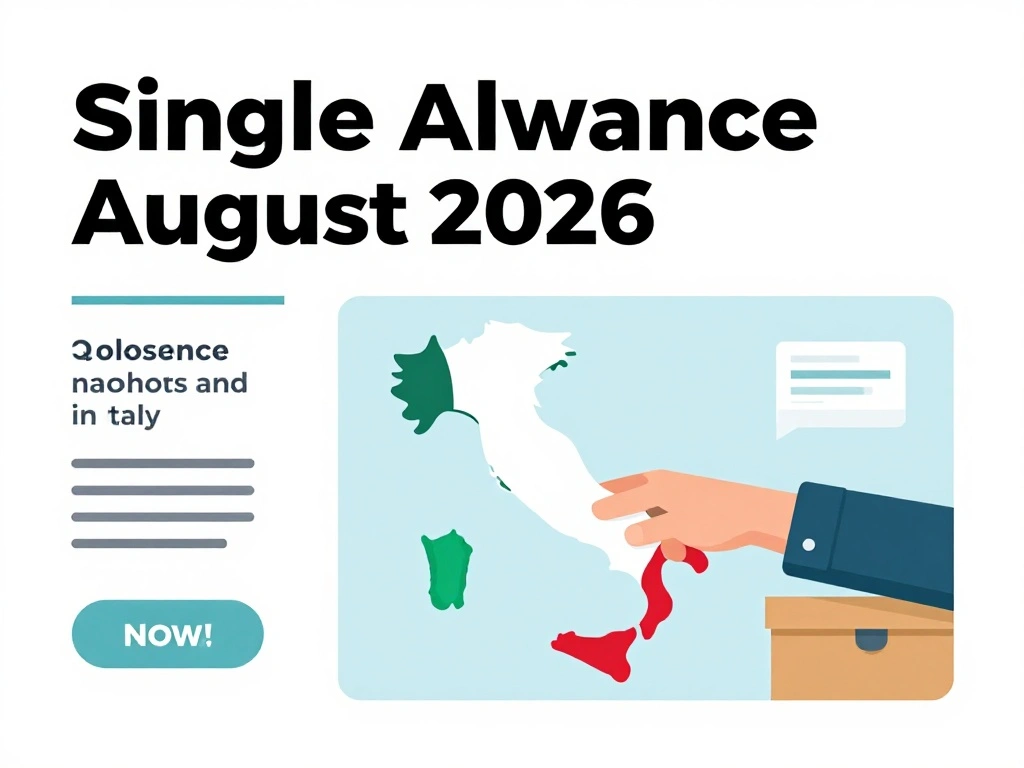
As of August 2026, Italian families receiving the Universal Single Allowance (Assegno Unico Universale) will see the benefit continue automatically, thanks to the principle of simplification under Article 12(3) of Legislative Decree 230/2021. This means that applications already submitted remain valid for subsequent years, including 2026, without the need to reapply. However, families must promptly communicate any changes, such as the birth of a new child or a child turning 18, by updating their application form. This streamlined process ensures that eligible households receive their payments without interruption, but it also places the responsibility on families to keep their information current.
Starting in February 2026, the allowance has been increased by 1.4% to reflect the annual cost-of-living adjustment, as published by INPS. The new amounts are now in effect, and families are reminded to renew their ISEE (Indicator of Equivalent Economic Situation) to ensure they receive the correct amount based on their current financial situation. Data from the first quarter of 2026 shows that households with two or more children have benefited the most from this adjustment, with an average increase of 1.5% for these families. This targeted support is crucial in a time when many families are feeling the pinch of inflation.
Looking at the broader fiscal picture, Italy’s Cabinet has allocated €20 billion over the next three years for family support in its latest budget law. However, a significant portion of these measures relies on temporary fixes rather than sustainable funding. Over 20% of the 2026 budget coverage comes from deferred spending and repurposed EU recovery funds, not new revenue. This raises concerns about the long-term viability of these benefits. While families gain the most from tax cuts and support programs, businesses and self-employed workers face tighter fiscal conditions. The budget’s impact on Italy’s deficit remains minimal in 2026, adding just 0.1% to GDP, but the challenge of maintaining these benefits beyond their expiration looms large.
To ensure the continuity of the Single Allowance and other family support measures, Rome will need to identify new revenue streams or cut spending elsewhere. This political and economic challenge becomes more pressing each year. For now, families
 Shimanta Das