Sealed for 2,000 Years: Pompeii Archaeologists Uncover Coins and Jewelry in Ancient Cupboard
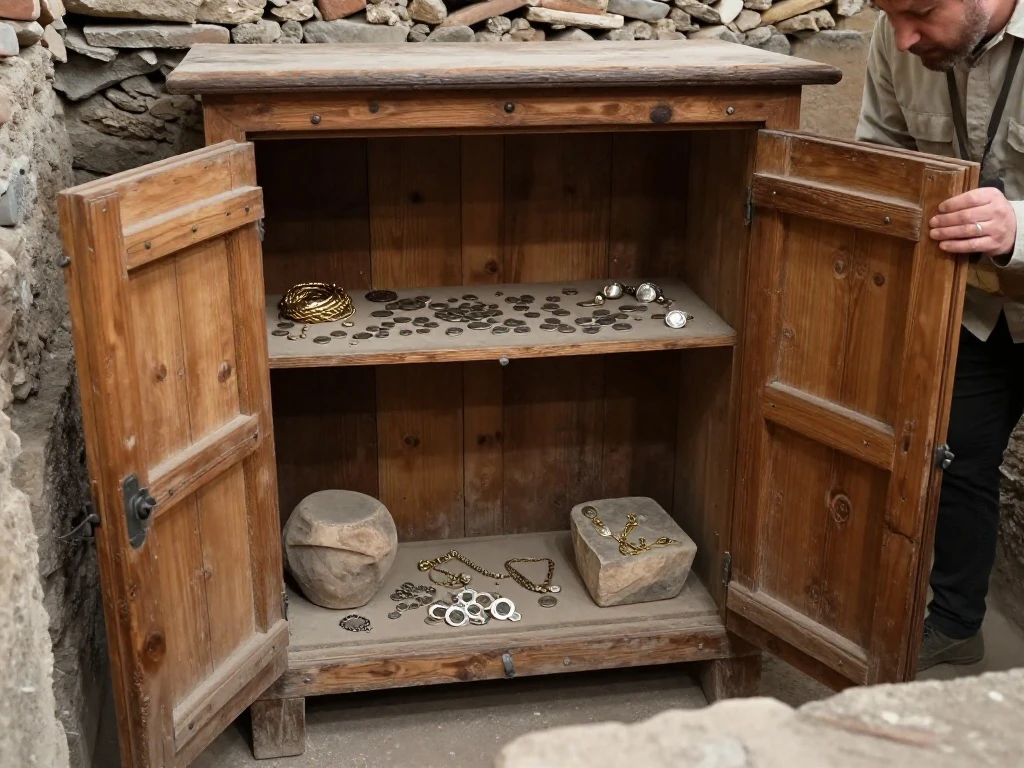
In a remarkable discovery at Pompeii, Italian archaeologists have unearthed the remains of a wooden cupboard that had remained sealed for nearly 2,000 years, according to the Pompeii Archaeological Park. The cupboard, found in a house on Via dell’Abbondanza—a major street in the ancient Roman city—contained a cache of coins and precious jewelry, offering a poignant glimpse into the lives of a family frozen in time by the eruption of Mount Vesuvius in AD 79.
The fact that both money and personal belongings were left inside the cupboard suggests that the residents may not have had enough time to retrieve them when the eruption struck. The skeletal remains of a man and a woman were also unearthed in the same room, indicating that the couple were trapped inside. Because the door was closed, the room remained free of pumice, but the couple were unable to escape. The exact circumstances of their departure and what happened to the other household members remain unknown, leaving archaeologists to piece together the final moments of their lives.
Interestingly, the house where these coins were found was excavated in 1912, but the cupboard and its contents remained hidden until now. The items in the closet, including paintings, and the location of the home on one of Pompeii’s main streets suggest “a certain standard of living” for the residents. These objects reveal glimpses of a family’s lost everyday life, from their financial resources to their personal adornments. The discovery is part of ongoing efforts by archaeologists who are constantly exploring the ruined city, searching under heaps of volcanic ash and pumice to peer into its preserved remains.
This latest find adds to the growing body of evidence about life in Pompeii before the catastrophe. The skeletal remains and the valuable items have provided some of the most important discoveries ever made in the ancient city, shedding light on the daily lives, social status, and tragic fate of its inhabitants. As excavations continue, each artifact helps to paint a more vivid picture of the Roman world that was abruptly silenced by Vesuvius.

 Shimanta Das