Post-Tropical Cyclone Isaias Leaves Trail of Outages and Flooding Across Eastern U.S.
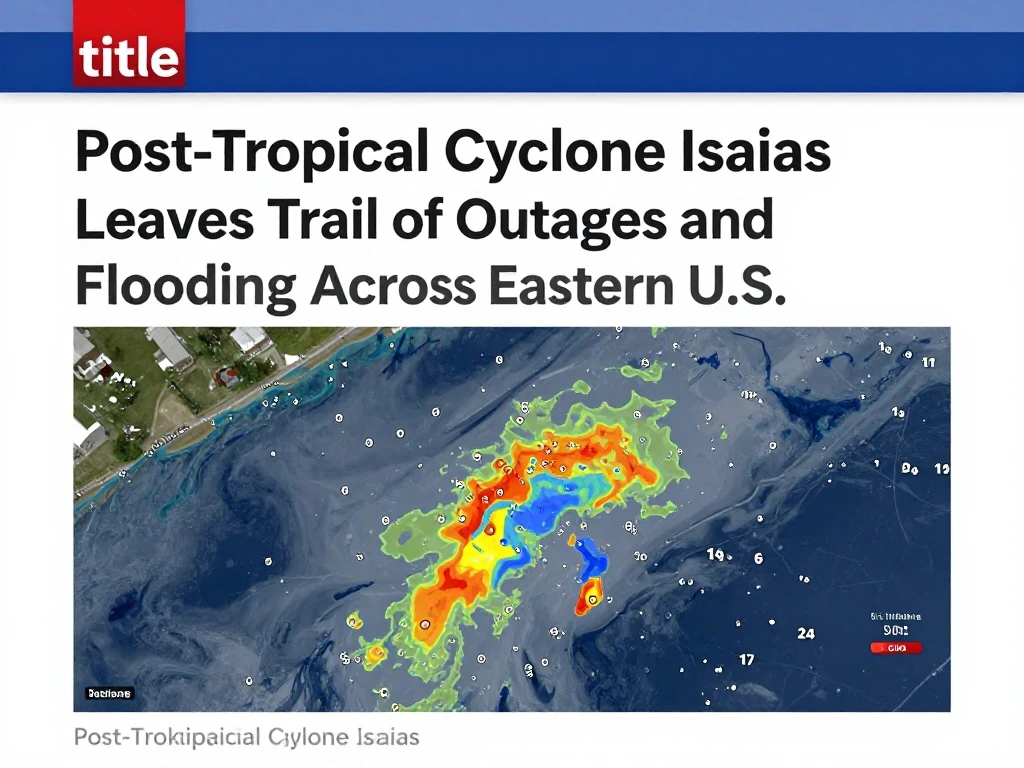
Post-Tropical Cyclone Isaias continues to unleash its fury across the eastern United States, leaving hundreds of thousands without power and raising concerns about additional outages and flooding. As of the latest reports, around 409,000 customers were without electricity in Florida, where Isaias made landfall on the Panhandle at approximately 8:30 p.m. The storm, which was the first hurricane to hit the U.S. mainland since Hurricane Milton struck Siesta Key, Florida, as a Category 3 storm with 120 mph winds in October 2024, has since weakened to a post-tropical cyclone. However, the danger is far from over. According to AccuWeather, Isaias is expected to continue producing winds of 40 to 60 mph and rainfall of 4-8 inches as it moves north into South Carolina and North Carolina, keeping the potential for additional power outages high.nnThe heavy rainfall is a major concern across the Southeast. Widespread totals of 4 to 8 inches, with isolated amounts up to 15 inches, could trigger significant flash flooding from the Florida Panhandle into southern Alabama, southwest Georgia, and the southern Appalachians. Across much of the remainder of the Southeast, rainfall amounts of 2-5 inches are expected, with localized higher amounts up to 10 inches possible, especially in the southern Appalachians and coastal Carolinas. The National Weather Service has indicated that while some nuisance to minor flooding is possible along streams and in low-lying areas, widespread flash flooding or moderate flooding along main stem rivers is unlikely based on current forecasts. Still, residents in affected areas should remain vigilant and avoid traveling through flooded roadways.nnIn response to the storm’s impact on energy infrastructure, the U.S. Department of Energy has taken action to support fuel supplies. “With this emergency exchange, the Energy Department is acting swiftly to help maintain refinery operations, limit disruptions to fuel supplies, and ensure American families and businesses continue to have access to affordable, reliable, and secure energy,” a department spokesperson said. This move aims to mitigate any potential fuel shortages as the storm disrupts refinery operations along the Gulf Coast and East Coast. The emergency exchange allows for the

 Shimanta Das