Philanthropist James Fergie Chambers Released on Bail in Spain
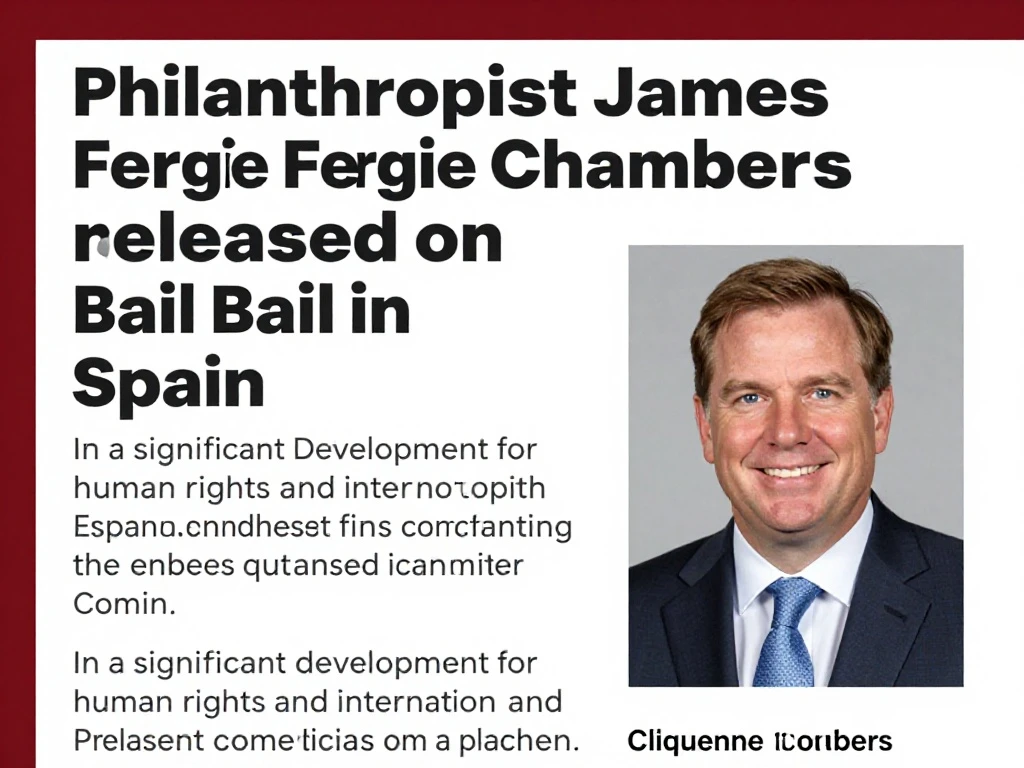
In a significant development for human rights and international law, pro-Palestinian activist and philanthropist James “Fergie” Chambers was released on conditional bail by a Spanish court on Friday. Chambers had been detained in Spain since July, when he was arrested at the request of the United States government. His release comes as his extradition to the US remains under review, and it has been welcomed by supporters who see it as a victory for free speech and justice.
The case has drawn international attention, with advocates arguing that it highlights the challenges faced by those who speak out on controversial issues. Chambers, a well-known philanthropist, has been a vocal supporter of Palestinian rights. His detention and the subsequent bail decision have sparked discussions about the intersection of politics, law, and human rights. “I think this case is important for human rights, for people who want to speak out anywhere in the world,” Chambers said following his release, underscoring the broader implications of his legal battle.
According to a ruling on Friday, the Spanish appeal court granted his request for release with several conditions. Chambers must report weekly to a local court, surrender his passport, remain in Spain, provide an address, and appear before the National Court whenever summoned. He left Aranjuez prison near Madrid on Friday afternoon, shortly after Spain’s High Court ordered his release. The conditions reflect the court’s attempt to balance the seriousness of the extradition request with Chambers’s rights and ties to the community.
Chambers’s legal team and family have expressed relief at the decision. His lawyer, Schnabel, welcomed his release but cautioned that the family remains uncertain about his future. “He could face up to 30 years in prison if extradited to the US and convicted,” Schnabel warned. The threat of a lengthy prison sentence looms large, and the extradition process is far from over. However, a key development is that his extradition to the US cannot proceed while his asylum application remains unresolved. This provides a temporary shield, but the outcome of the asylum bid will be crucial in determining whether he will be sent to the United States.
Chambers’s asylum
 Shimanta Das