No Kings Protests Return Nationwide as Trump Campaigns Ahead of Midterms
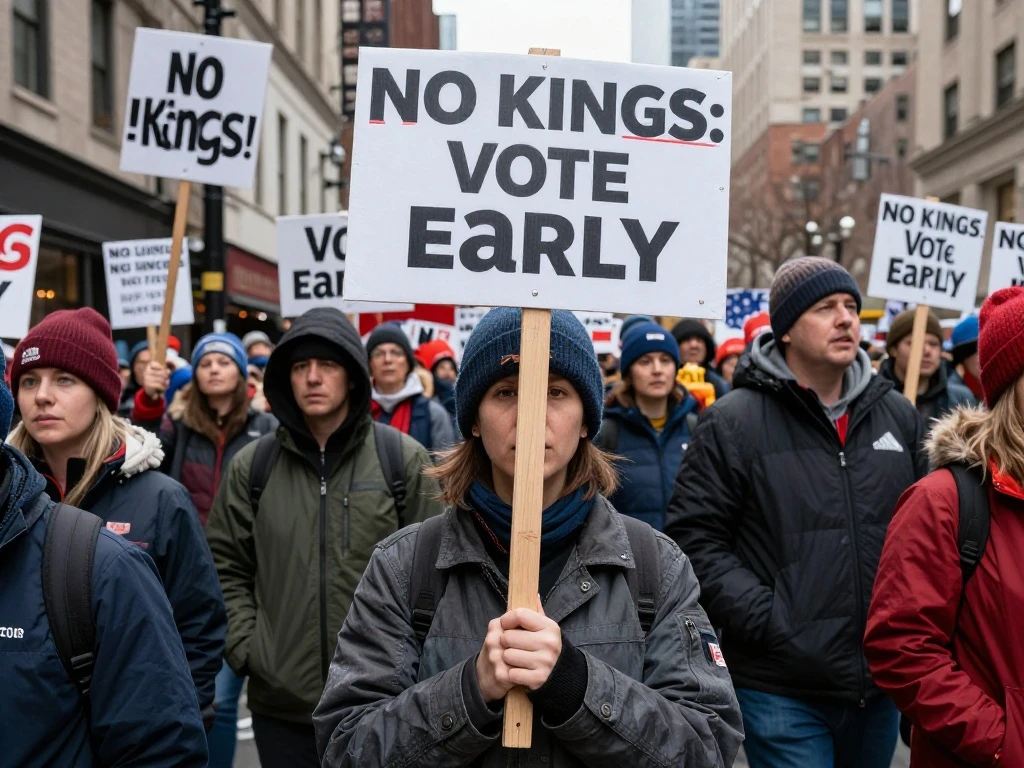
On Saturday, the “No Kings: Vote Early” day of action brought demonstrators to cities across the country, but the atmosphere was notably more subdued than at previous iterations of the protest movement. While crowds still gathered to voice opposition to former President Donald Trump and his allies, the events lacked the intense energy of earlier rallies. Many prominent Democrats skipped the demonstrations, and attendance appeared smaller in some locations. In Washington, D.C., the scene was lively but lighthearted: a large inflatable donkey bounced around next to a paper-mache replica of Donald Trump’s head, and activist Athena Haresign wore an inflatable donkey costume. The donkey, the floating head, and a voting sign were all part of the day’s push to encourage early voting.
The “No Kings” network, which includes organizations like Indivisible, has now held four such days of action. Ezra Levin, co-founder of Indivisible, explained the evolution of the protests: “The first three No Kings were designed to send a message,” he said. This time, the focus shifted toward tangible electoral action—specifically, getting voters to cast ballots early. Volunteers were seen handing out literature and maps detailing get-out-the-vote distribution routes, while others distributed Palestinian flags, reflecting a mix of progressive causes under the broader anti-Trump banner. The events took place in diverse locations, from Portland, Maine, to other cities nationwide, underscoring the decentralized nature of the movement.
Despite the lower intensity, the protests served as a reminder that Trump’s campaign activities are intensifying as the midterm elections approach. The “No Kings” movement aims to channel opposition into electoral participation, with early voting a key strategy. However, the decision by many high-profile Democrats to stay away may signal a cautious approach or a desire to distance themselves from protest politics. Organizers like Levin remain focused on the long game: using the demonstrations as a catalyst for voter turnout. As the midterms draw nearer, the effectiveness of such grassroots efforts will be tested at the ballot box.
 Shimanta Das